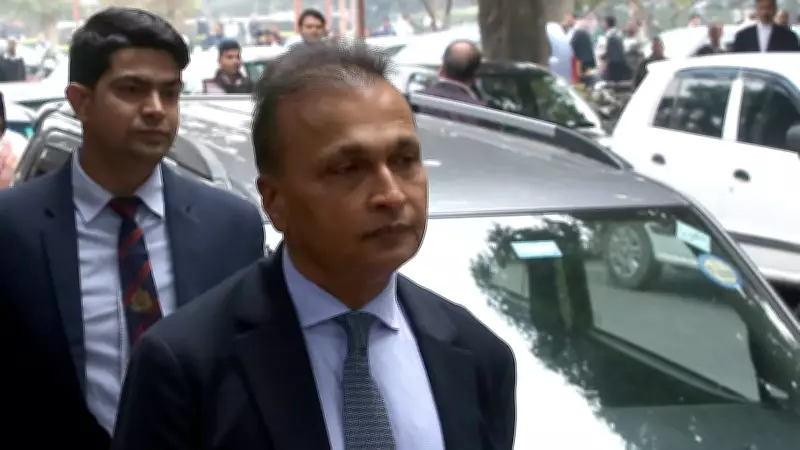
Supreme Court Directs SIT Probe into Anil Ambani's Reliance Group Over Bank Fraud Allegations
The Supreme Court of India has issued a significant order for a Special Investigation Team (SIT) probe into the Anil Ambani-led Reliance Group concerning allegations of bank fraud and collusion. In a landmark ruling, the apex court emphasized the need for a thorough investigation into the conduct of bank authorities and the potential collusion in loan disbursements.
Court's Directives to Investigative Agencies
A three-judge bench, headed by Chief Justice of India Surya Kant and including Justices Joymalya Bagchi and Vipul M Pancholi, mandated that the Central Bureau of Investigation (CBI) and Enforcement Directorate (ED) act "fairly, independently, and very swiftly" in their inquiries. The bench specifically instructed the ED to form an SIT comprising its senior officers to delve into the matter.
The court highlighted that the CBI must investigate whether loans were released in collusion with the management of Anil Ambani Group companies, dismissing concerns over Section 17A of the Prevention of Corruption Act as "totally misconceived." The bench asserted, "Regardless of any such provision, the CBI must look into the nexus/collusion/connivance/conspiracy, if any, and take all measures to conduct the investigation to its logical conclusion."
Key Arguments and Assurances in Court
During the proceedings, Advocate Prashant Bhushan, representing petitioner E A S Sarma, raised apprehensions about Anil Ambani potentially fleeing the country. In response, Solicitor General Tushar Mehta assured the court that all necessary preventive actions would be taken to ensure no impediments to the investigation.
Senior Advocate Mukul Rohatgi, appearing for Anil Ambani, assured that his client would not leave India without the court's permission. Rohatgi proposed a repayment plan for the dues, suggesting the formation of a committee involving entities like SBI and RBI to assess the amount and facilitate staggered payments. He stated, "I am not averse to an SIT. I am not opposing anything... If through the good offices of the court and government, they can form a committee... and let's have a look at it as to what is the amount due."
However, Solicitor General Mehta countered that compounding the alleged offences might not be feasible even with repayment, citing a forensic audit that indicated siphoning of funds. He emphasized, "We may not perhaps be able to compound these offences even if there is a readiness to pay."
Investigation Details and Judicial Scrutiny
The court scrutinized the timeline of the investigation, noting that the CBI FIR was filed in 2025 despite a Bank of Baroda audit report from 2020 detailing fund siphoning. Bhushan pointed out that the first arrest occurred only after the Supreme Court issued a notice, raising questions about delays.
Justice Bagchi referenced the CBI report, questioning the focus on Section 17A when forensic auditors alleged collusion beyond loan term breaches. The CJI inquired why multiple FIRs were not registered for independent transactions, to which Mehta responded that it would be examined.
Rohatgi disclosed that the CBI has filed five FIRs, and the ED has registered three ECIRs based on these, with property worth Rs 12,000 crore attached and over 100 summons issued. He asserted, "They are cooperating. Nobody is running away."
Court's Final Observations and Orders
CJI Surya Kant remarked that if there was an intention to siphon public funds from the outset, such offences could not be condoned merely by willingness to repay. Rohatgi maintained that there was no such intention, citing four decades of business operations, but the CJI emphasized that this must be determined through investigation.
The court noted evidence of forged bank guarantees, as highlighted by Bhushan, which Mehta stated constitutes a criminal offence that cannot be compounded. In conclusion, the Supreme Court ordered monthly status reports from the investigative agencies, with the first report due in four weeks, to ensure the investigation progresses effectively towards a logical conclusion.