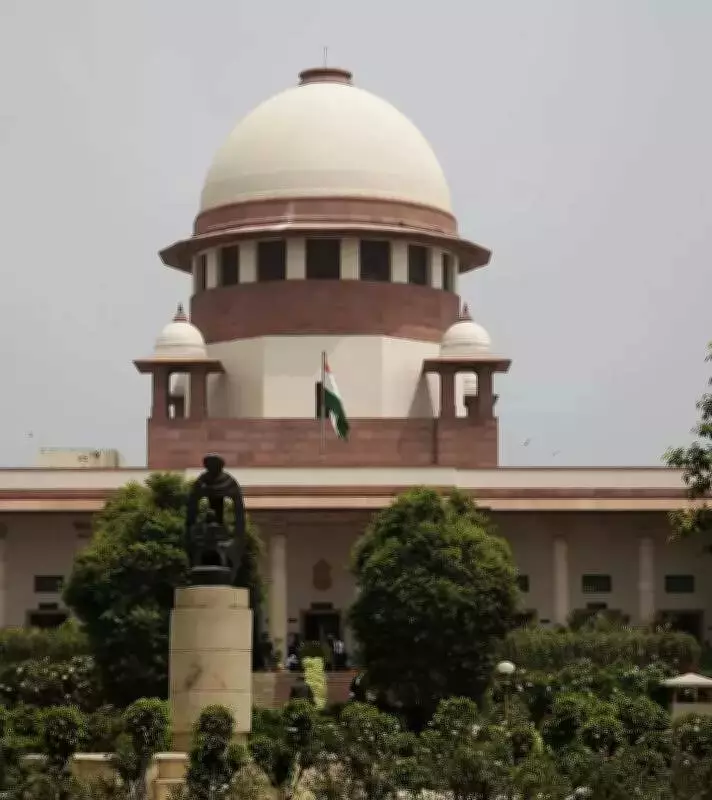
In a significant development concerning environmental protection and judicial procedure in Kolkata, the Supreme Court of India has intervened in a Public Interest Litigation (PIL) addressing alleged illegal construction along the banks of the Hooghly River. The apex court has requested the Calcutta High Court to continue hearing the case in a suo motu capacity, while also directing the appointment of an eminent lawyer as an amicus curiae to assist the proceedings.
Supreme Court's Directive on the PIL
The three-judge bench, comprising Chief Justice of India Surya Kant, Justice Joymalya Bagchi, and Justice Vijay Bishnoi, issued this order on January 15. The bench modified the previous order of the Calcutta High Court, specifically requesting that the High Court proceed with the subject proceedings suo motu. For proper legal assistance, the Supreme Court has asked the High Court to appoint an eminent lawyer as an amicus curiae. Additionally, the official respondents have been directed to produce all relevant records before the High Court to ensure full cooperation and transparency in the case.
Background of the Litigation
The PIL was originally filed by Sandip Pramanik, a resident of Garia in Kolkata, against the construction of a 45-storey building on the Hooghly banks by PS Group Realty Private Limited. In December 2025, a division bench of the Calcutta High Court, led by Chief Justice Sujoy Paul and Justice Partha Sarathi Sen, ruled that the PIL was maintainable. However, the court imposed a fine of Rs 50,000 on the litigant for failing to disclose six pending FIRs at the time of filing the petition.
The counsel for PS Group Realty Private Limited argued that the PIL was not maintainable on multiple grounds, challenging its validity. Despite this, the High Court proceeded with the case, leading to the recent Supreme Court intervention.
Implications of the Supreme Court's Order
In its order, the Supreme Court clarified that the PIL petitioner will not be permitted to participate directly in the court proceedings. However, he has been granted the liberty to assist the amicus curiae appointed by the High Court. This move aims to streamline the judicial process while ensuring that the case receives expert legal guidance without unnecessary delays or procedural hurdles.
The Supreme Court's directive underscores the importance of addressing environmental concerns related to illegal construction on riverbanks, particularly in ecologically sensitive areas like the Hooghly. By requesting the High Court to continue the proceedings suo motu, the apex court emphasizes the need for judicial oversight in matters of public interest, especially when they involve potential violations of environmental laws and regulations.
Key Points of the Case
- The PIL highlights alleged illegal construction activities on the banks of the Hooghly River in Kolkata.
- The Calcutta High Court initially fined the litigant Rs 50,000 for non-disclosure of pending FIRs.
- The Supreme Court has modified the High Court's order to ensure the case continues suo motu.
- An amicus curiae will be appointed to provide legal assistance in the proceedings.
- The petitioner is barred from direct participation but can assist the amicus curiae.
This case brings to light critical issues surrounding urban development, environmental protection, and judicial accountability in India. The Supreme Court's involvement signals a proactive approach to safeguarding public interest and ensuring that legal processes are conducted with utmost diligence and expertise.