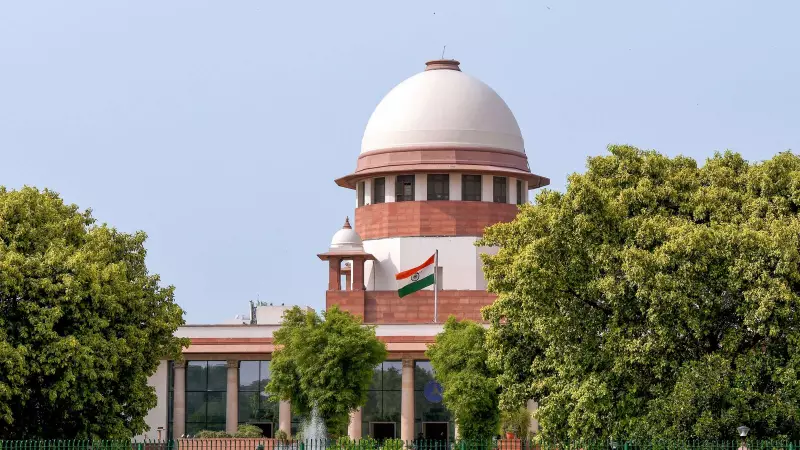
The Supreme Court of India is poised to deliver a crucial opinion on November 20 regarding the President's reference concerning the timeframes within which governors should grant assent to bills passed by state legislatures. This constitutional matter has significant implications for the legislative process across Indian states.
Constitutional Question Before the Court
A Constitution Bench comprising five distinguished judges - Chief Justice of India D Y Chandrachud, Justice Hrishikesh Roy, Justice J K Maheshwari, Justice P S Narasimha, and Justice Manoj Misra - concluded hearings on the matter and reserved their opinion. The bench specifically addressed the reference made by President Droupadi Murmu under Article 143 of the Constitution, which deals with the President's power to consult the Supreme Court.
The central question before the court revolves around whether governors can withhold assent to bills indefinitely without providing reasons, effectively creating a constitutional deadlock. This issue has gained prominence following several instances where bills passed by state legislatures faced prolonged delays in gubernatorial approval.
Legal Proceedings and Arguments
During the proceedings, the Supreme Court emphasized that governors cannot "thwart the normal course of lawmaking" by simply sitting on bills. The Constitution Bench heard extensive arguments from multiple parties, including the central government, state governments, and legal experts.
The court examined whether there should be a constitutionally mandated timeframe for governors to decide on bills presented for assent. Currently, the Constitution does not specify any time limit for governors to act on bills passed by state legislatures, creating what many legal experts call a "constitutional vacuum."
Attorney General R Venkataramani and Solicitor General Tushar Mehta represented the Union government during the hearings, presenting arguments about the constitutional provisions and practices governing gubernatorial powers.
Broader Implications for Indian Federalism
The Supreme Court's opinion, expected on November 20, could have far-reaching consequences for center-state relations and the balance of power between elected governments and appointed governors. The outcome may establish important precedents regarding the exercise of gubernatorial discretion in legislative matters.
This development comes amid increasing instances of political friction between state governments and governors in various states, particularly where the ruling party at the state level differs from the party in power at the center. The Supreme Court's clarification on this constitutional matter is eagerly awaited by legal experts, politicians, and governance specialists across the country.
The November 20 opinion is expected to provide much-needed clarity on the constitutional responsibilities of governors and their role in the legislative process, potentially ending the practice of keeping bills pending indefinitely without constitutional justification.