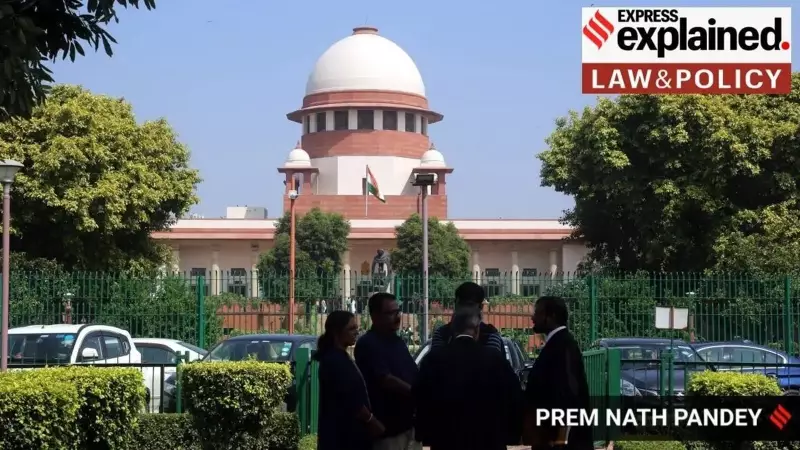
The Supreme Court of India has delivered a significant verdict in the 2020 Northeast Delhi riots conspiracy case, drawing a clear distinction between different accused based on their alleged roles. On Monday, January 5, a bench comprising Justices Aravind Kumar and Prasanna B Varale granted bail to five individuals while denying relief to activists Umar Khalid and Sharjeel Imam.
The Bail Verdict: A Tale of Two Outcomes
The court granted bail to Gulfisha Fatima, Meeran Haider, Shifa Ur Rehman, Mohammad Salim Khan, and Shadab Ahmad. However, it rejected the bail pleas of Umar Khalid and Sharjeel Imam, who are accused of orchestrating a "larger conspiracy" behind the communal violence. All accused had cited prolonged pre-trial incarceration and delays in the judicial process as primary grounds for seeking bail.
The bench clarified that while extended custody cannot be permitted to become punitive, it also cannot ignore threats to state security. "Delay does not operate as a trump card that automatically displaces statutory restraint; rather, delay serves as a trigger for heightened judicial scrutiny," the court observed while reading out the orders.
Prolonged Incarceration vs. Stringent UAPA Provisions
The court's ruling offers a nuanced interpretation of the Unlawful Activities Prevention Act (UAPA), particularly its stringent bail conditions under Section 43D(5). The bench stated that prolonged incarceration cannot be an "absolute entitlement" for bail in cases involving terror allegations under the UAPA.
In granting bail to the five accused, the Supreme Court emphasized their "lesser" alleged involvement in the conspiracy, rather than solely relying on the length of their custody. This highlights the court's case-by-case approach, weighing individual roles against the gravity of the charges.
Precedents Where Delay Secured Bail Under UAPA
The judgment references important past rulings where extended imprisonment did lead to bail, despite UAPA's high threshold. In the landmark 2021 case of Union of India v K A Najeeb, the Supreme Court granted bail where the accused had spent over five years in jail with 276 witnesses still awaiting examination.
The court had then ruled: "The rigours of such provisions will melt down where there is no likelihood of trial being completed within a reasonable time and the period of incarceration already undergone has exceeded a substantial part of the prescribed sentence."
This precedent was later applied in April 2024 to grant bail to former professor Shoma Sen in the Bhima Koregaon case, and in July 2024 to grant bail to Sheikh Javed Iqbal, a Nepali citizen who had been in jail for over nine years with minimal trial progress.
Balancing Liberty and National Security
The Supreme Court's latest order reinforces the complex balance the judiciary must strike between an individual's right to liberty under Article 21 of the Constitution and the state's imperative to ensure security. The bench cautioned against turning a "Nelson’s eye" to security concerns, even while acknowledging that pre-trial detention should not morph into punishment.
This verdict underscores that while delay in trial is a crucial factor prompting judicial review, it is not an automatic pass for bail in cases involving serious charges under anti-terror laws. The court's decision is set to influence future bail hearings in UAPA cases, where the argument of prolonged incarceration will be scrutinized alongside the specific allegations and evidence against each accused.