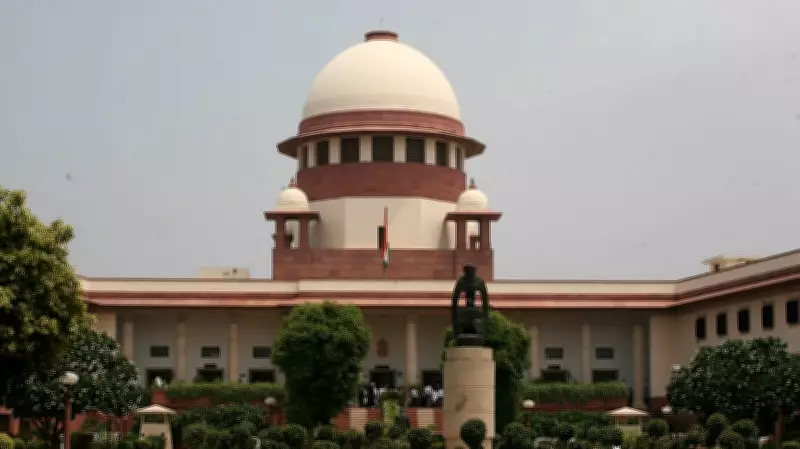
Supreme Court Seeks Response from Centre and 12 States on PIL Challenging Anti-Conversion Laws
The Supreme Court of India has taken a significant step by issuing formal notices to the Central government and twelve state governments in response to a fresh Public Interest Litigation (PIL) that challenges the constitutional validity of anti-conversion laws enacted across various states. This development marks a crucial legal examination of legislation that has sparked widespread debate and controversy regarding religious freedom and state intervention.
Petitioner's Argument: Laws Incentivize Vigilante Complaints
During the proceedings, the counsel representing the petitioner presented a compelling argument, asserting that certain provisions within these state anti-conversion laws create an environment that incentivizes vigilante groups to file complaints against alleged conversions. The lawyer emphasized that this legal framework has led to a surge in complaints, many of which may be motivated by factors other than genuine concerns about unlawful conversions.
The petitioner's legal team contended that these laws, while ostensibly aimed at preventing forced conversions, have been structured in a manner that encourages private individuals and groups to act as watchdogs, potentially leading to harassment and misuse of legal provisions. This argument forms the core of the challenge, suggesting that the laws might be violating fundamental rights by creating a chilling effect on religious practices and personal freedoms.
Legal and Social Implications of the Case
The Supreme Court's decision to issue notices indicates that the judiciary is willing to scrutinize these controversial laws that have been implemented in several states across India. The case raises important questions about:
- The balance between religious freedom and state regulation
- The potential for misuse of anti-conversion legislation
- The role of vigilante groups in law enforcement
- Constitutional protections against arbitrary state action
Legal experts suggest that this PIL could become a landmark case in determining the boundaries of state power in regulating religious conversions. The outcome may have far-reaching consequences for how conversion laws are interpreted and implemented throughout the country.
Broader Context and Previous Legal Challenges
This is not the first time anti-conversion laws have faced judicial scrutiny. Several states have enacted versions of these laws over the years, often facing legal challenges in various courts. The current PIL represents a consolidated effort to address what petitioners see as a pattern of legislation that may infringe upon constitutional guarantees.
The Supreme Court's notice to both the Centre and twelve state governments suggests the court recognizes the national significance of this issue. By involving multiple state governments, the court appears to be acknowledging that this is not merely a local or regional concern, but one that touches upon fundamental rights that transcend state boundaries.
As the legal process unfolds, all eyes will be on how the Centre and the twelve state governments respond to the Supreme Court's notice. Their arguments and defenses will likely shape the future trajectory of this important constitutional challenge that sits at the intersection of law, religion, and individual liberty in contemporary India.