Supreme Court Upholds Kerala HC Ruling: No Tolls on Congested, Pothole-Ridden Highways
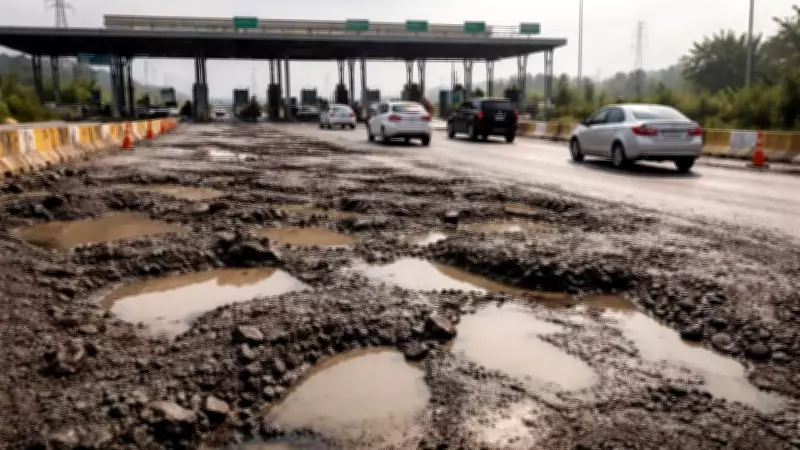
In a landmark judgment that reaffirms citizens' rights against administrative negligence, the Supreme Court of India has ruled that no tolls should be charged on roads marked by potholes, traffic jams, and permanent congestion. The decision, delivered on August 18, 2025, emphasizes that the public's payment of user fees is inseparably linked to the promise of safe, unhindered travel.
Court Rejects NHAI Appeals, Backs Citizen-Centric Approach
A Constitution Bench led by Chief Justice B.R. Gavai, along with Justices K. Vinod Chandran and N.V. Anjaria, dismissed appeals filed by the National Highways Authority of India (NHAI) and its concessionaire. The Bench upheld the Kerala High Court's decision to suspend toll collection for four weeks on a congested stretch of National Highway between Ernakulam and Mannuthy.
The Supreme Court praised the High Court for acting in a citizen-centric manner, noting that the long traffic queues, fuel wastage, environmental harm, and psychological burden on commuters outweighed commercial and contractual considerations.

Background: Public Interest Litigation and Traffic Nightmares
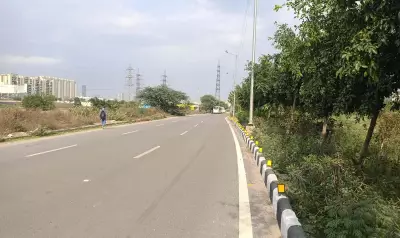
The legal action originated from a public-interest petition filed in the Kerala High Court concerning the Edapally-Mannuthy section of NH-544, specifically the Paliyekkara toll plaza in Thrissur district. Petitioners highlighted excessive congestion due to extended construction projects, potholes, poor service roads, and inadequate traffic management, leading to commuters spending hours stuck in traffic.
The situation deteriorated despite multiple High Court orders directing NHAI to rectify the issues. Reports indicated traffic jams lasting up to 12 hours, especially during weekends, prompting the Kerala High Court to issue an order on August 6, 2025, suspending toll collection for four weeks and requiring authorities to fix congestion problems within that timeframe.
Supreme Court's Grim Observations on Toll-Road Ecosystem
The Supreme Court painted a stark picture of the toll-road system, observing:
- Roads built under Build Operate and Transfer (BOT) contracts reflect a sad reality where costs are extracted from users beyond construction and maintenance expenses.
- Roads often fall into disrepair due to natural vagaries and neglect, with toll collectors sometimes behaving like satraps due to understaffing.
- Citizens endure hours in cramped queues with engines running but barely moving, representing a tragedy for both patience and the environment.
These observations set the tone for the Court's decision, framing the case not merely as a contractual or revenue issue but as a matter of public trust and citizen welfare.
Arguments from NHAI and Concessionaire
Representing NHAI, Solicitor General Tushar Mehta argued that congestion was limited to four black spots—Amballur, Perambra, Muringur, and Chirangara—where flyovers and underpasses were under construction. He contended that the primary carriageway remained largely unaffected and that local disruptions should not justify suspending tolls on the entire 64.94-kilometre stretch.
Senior Advocate Shyam Divan, appearing for the concessionaire, asserted that the concessionaire was not responsible for the impasse, as maintenance at black spots had been assigned to another contractor by NHAI. He warned that toll suspension caused daily losses of nearly 49 lakh rupees, threatening the concessionaire's ability to maintain even unaffected stretches.
Commuters' Plight and Supreme Court's Analysis
Senior Advocate Jaayanth Muthuraj, representing the petitioners, highlighted the gravity of the situation, citing 12-hour traffic jams on the Ernakulam-Thrissur route and unheeded High Court directives.
The Supreme Court declined to intervene, endorsing the High Court's citizen-centric approach. The Bench rejected arguments downplaying commuters' suffering, environmental damage, and fuel wastage. It agreed with the High Court's reasoning that the public's obligation to pay tolls is premised on assured unhindered access, and any failure by NHAI or its agents breaches this trust.

The Court noted that even localized congestion could cripple the entire highway due to cascading traffic effects. It distinguished this case from precedents involving minor repairs, emphasizing the complete lock-jam scenario here.
Key Rulings and Future Implications
Addressing liability concerns, the Supreme Court clarified that the High Court's remarks did not establish absolute liability; damage claims would require proof of causation and could be pursued in appropriate courts. The Bench also expressed concern over NHAI assigning further construction to another contractor despite the concessionaire's maintenance obligations, though it refrained from detailed commentary.
In a concluding observation, the Court stated: "In the meanwhile, let the citizens be free to move on the roads, for use of which they have already paid taxes, without further payment to navigate the gutters and potholes, symbols of inefficiency."
The Bench allowed NHAI or the concessionaire to request lifting the suspension once traffic flow resumes, even before the four-week period ends. Ultimately, the Supreme Court dismissed all appeals, affirmed the Kerala High Court's interim order, and called for continued monitoring to ease traffic conditions.
This judgment underscores the judiciary's role in upholding public trust and ensuring that infrastructural failures do not unjustly burden citizens, setting a precedent for accountability in highway management across India.