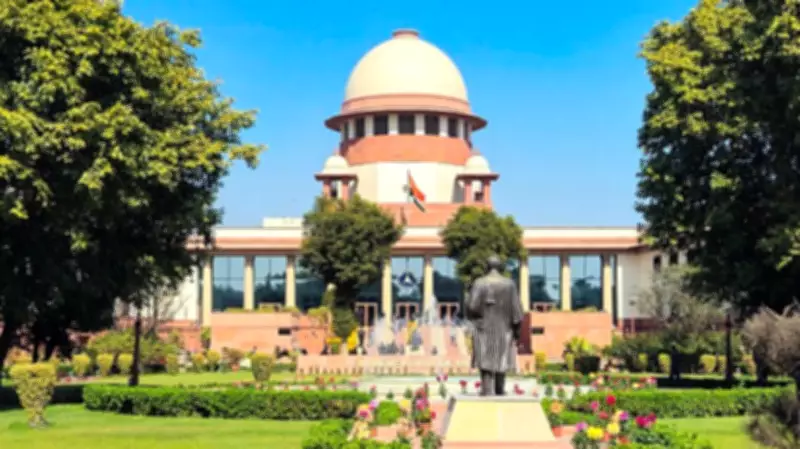
The Supreme Court of India on Wednesday observed that there is no legislative vacuum to deal with hate speech cases, as it dismissed a batch of petitions seeking directions to the government to enact a law or frame guidelines to curb hate speeches. A bench of Justices Sanjiv Khanna and Dipankar Datta said that the existing laws are adequate to address the issue and that the court cannot legislate.
Existing Laws Sufficient
The bench noted that there are several provisions in the Indian Penal Code (IPC) and other statutes that deal with hate speech, incitement to hatred, and promoting enmity between different groups. The court said that if there is any deficiency, it is in the enforcement of these laws, not in their existence. The petitioners had argued that the current legal framework is insufficient and that there is a need for a comprehensive law to prevent hate speeches.
Court's Observations
The Supreme Court observed that the issue of hate speech is sensitive and requires a balanced approach, keeping in mind the fundamental right to freedom of speech and expression under Article 19(1)(a) of the Constitution. However, the court also emphasized that this right is subject to reasonable restrictions under Article 19(2), which includes the interest of public order, decency, and morality. The bench further stated that the court cannot issue directions in the nature of legislation, as it is the domain of the legislature.

Petitions Dismissed
The court dismissed the petitions, stating that there is no legislative vacuum and that the existing legal framework is capable of dealing with hate speech cases. The bench also expressed hope that the law enforcement agencies would take appropriate action in accordance with the law. The petitioners, including various social activists and organizations, had sought a direction to the government to frame guidelines to prevent hate speeches, especially during elections and public gatherings.
Background
The issue of hate speech has been a matter of concern in India, with several incidents reported in recent years. The Supreme Court had earlier also expressed concern over the increasing incidents of hate speech and had asked the government to consider enacting a law. However, in the present case, the court found that the existing laws are sufficient and that the problem lies in their implementation.
The court's decision comes as a relief to the government, which had opposed the petitions, arguing that the existing legal framework is adequate and that the court should not interfere in policy matters. The government had also pointed out that the Law Commission had already submitted a report on the issue, recommending certain amendments to the IPC.