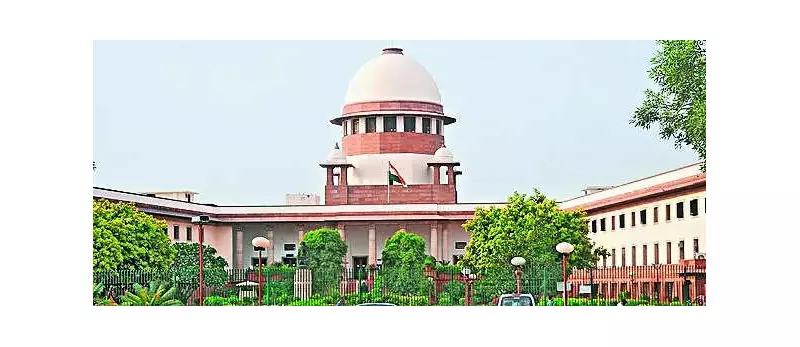
In a significant observation, the Supreme Court of India has stated that the government's success in combating Left-wing extremism cannot be measured by arrests alone. The court emphasized the urgent need for adequate infrastructure and exclusive special courts to ensure speedy trials for those apprehended.
Court's Directive Amid Security Pledge
The bench, comprising Chief Justice of India Surya Kant and Justice Joymalya Bagchi, made these remarks on Tuesday. This comes at a crucial time when Union Home Minister Amit Shah has publicly vowed to eradicate the menace of Left-wing extremism by the end of March.
The court was hearing a bail plea related to a high-profile Naxalite case. Kailash Ramchandani was arrested in June 2019 for his alleged role in a deadly improvised explosive device (IED) blast in Maharashtra's Gadchiroli district. The explosion claimed the lives of 15 police personnel.
The Gadchiroli Case and Trial Delays
According to the prosecution, Ramchandani was the person who signalled the Naxalites to trigger the IED. He was also accused of using a small shop as a front to supply materials used in IEDs and walkie-talkies to the extremists.
Senior advocate Trideep Pais, representing the accused, informed the court about the severe delays in the trial. He stated that scores of cases are pending before the same special judge handling Ramchandani's case. The prosecution has listed a staggering 146 witnesses, of which only one has been examined in the last three months.
Pais pleaded for bail, highlighting that his client had no prior criminal record and had already been in custody for six-and-a-half years since his arrest.
Government's Stance and Judicial Caution
Additional Solicitor General Aishwarya Bhati, arguing for the state, strongly opposed the bail. She told the bench that the accused's hands were "red with the blood of 15 police personnel," as the blast was triggered on his signal.
While acknowledging the gravity of the charges, the Supreme Court bench pointed to systemic failures. "Your success story against Left-wing extremism cannot be based on arrests alone," the bench observed. It stressed that speedy trial is only possible when the government sets up exclusive special courts for such cases.
The court noted that with many cases before a single judge and a long list of witnesses, the trial was unlikely to conclude soon. However, exercising caution, the bench granted only interim bail to Ramchandani with strict conditions.
He will remain under constant police watch and must report to the police station near his home once every week. The court made it clear that any attempt by him to contact his alleged associates among the Naxalites would lead to immediate cancellation of his interim bail.
This ruling underscores a critical gap in India's legal framework for handling terrorism and extremism cases, highlighting the need for judicial infrastructure to match security operations.