The Supreme Court of India on Tuesday expressed its astonishment at the unusually large volume of legal petitions being filed in an ongoing case concerning the management of stray dogs. The court observed that the number of interim applications in this matter has surpassed what is typically seen even in cases involving human rights or critical human issues.
Bench Questions the Unprecedented Number of Pleas
A bench comprising Justices Vikram Nath and Sandeep Mehta made this significant observation when lawyers approached the court to mention their newly filed interlocutory applications. Justice Sandeep Mehta pointedly remarked, "So many applications normally don’t even come in cases of humans."
In response to the hearing requests for a transfer petition, the court informed the lawyers that the matter was already listed to be taken up on Wednesday. The bench assured that all connected pleas would be heard together on the same day and that every lawyer would be given an opportunity to present their arguments.
Background of the Suo Motu Case and Past Directives
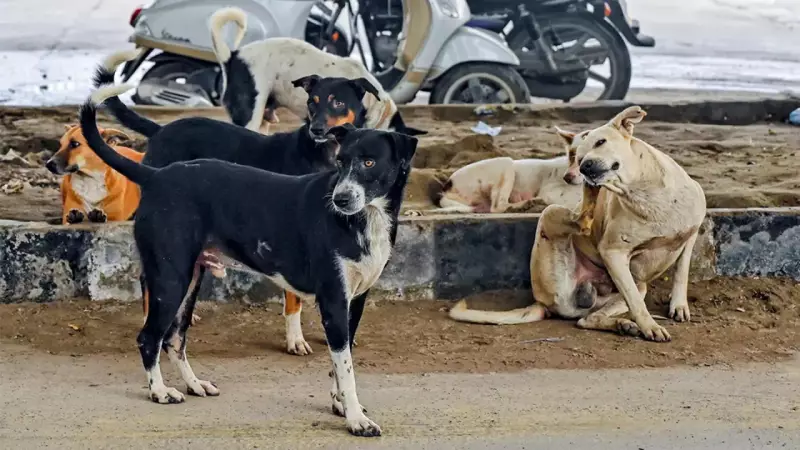
The apex court is examining the complex issue of stray dogs through a suo motu case it initiated on July 28 last year. This judicial intervention was prompted by widespread media reports highlighting a sharp increase in dog bite incidents, particularly those leading to rabies infections among children in the national capital.
Earlier, on November 7, the Supreme Court had taken serious note of an "alarming rise" in dog bite cases within institutional premises like schools, hospitals, and railway stations. In a decisive move, it had ordered the immediate relocation of stray dogs from such sensitive areas to designated shelters. The court mandated that this relocation must follow due process, including sterilization and vaccination of the animals.
The bench had further clarified a critical point: these canines would not be released back to the locations from where they were picked up. In a broader directive for public safety, the court had also ordered authorities to ensure the removal of all cattle and other stray animals from national highways, state highways, and expressways.
A Reflection of Systemic Failure
The Supreme Court had strongly stated that the recurrence of dog bite incidents in institutional zones was not merely a sign of administrative neglect. It reflected a deeper "systemic failure" to protect these public spaces from hazards that are largely preventable with proper management and enforcement.
The case is now slated to be heard by a special three-judge bench, which will include Justices Vikram Nath, Sandeep Mehta, and N V Anjaria. The court's upcoming hearing is expected to address the pile of applications and chart the future course of action in this nationally significant public health and safety issue.