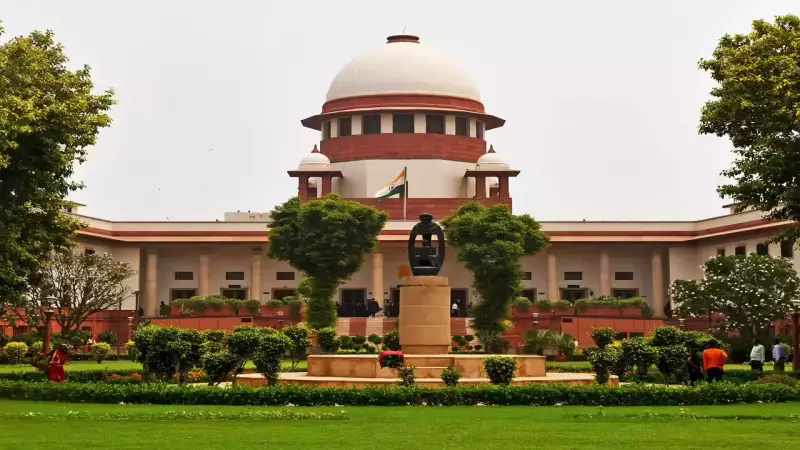
In a significant ruling that reinforces constitutional safeguards, the Supreme Court of India has clamped down on the misuse of preventive detention laws. The apex court made it clear that such stringent measures cannot be employed simply because authorities fear an accused person might commit another crime after being released on bail.
Court's Firm Stance on Detention Laws
The bench observed that preventive detention cannot be invoked just to prolong the custody of stubborn offenders. The court emphasized that the mere apprehension that an accused may not reform and could commit a fresh offence after securing bail is not a valid ground to order preventive detention. This interpretation strikes at the heart of how executive authorities have sometimes used preventive detention as a tool to keep individuals behind bars beyond ordinary legal processes.
The Hyderabad NDPS Case That Sparked the Ruling
The judgment came while quashing the preventive detention order against a woman from Hyderabad who was facing three separate cases under the stringent Narcotic Drugs and Psychotropic Substances (NDPS) Act. At the time, the accused was already in judicial custody. However, the Hyderabad collector had issued an order to detain her under preventive laws if she managed to get bail, with the stated aim of preventing her from committing further crimes.

The Supreme Court found this reasoning flawed. It held that "mere apprehension on the part of the detaining authority that in the event of the detenu being released on bail, she was likely to indulge in similar crimes that would be prejudicial to maintenance of public order would not be a sufficient ground to order her preventive detention."
Legal Remedies Exist for Bail Violations
The court provided a clear roadmap for how such situations should be handled under the law. It stated that if an accused, after being released on bail, actually commits a fresh offence, the state has adequate legal remedies. These include:
- Seeking cancellation of bail in the same court.
- Challenging the grant of bail in a higher court.
These processes under ordinary law must be followed, and preventive detention cannot be the sole or primary reason invoked based on future apprehensions. The ruling underscores that preventive detention, a drastic measure that curtails personal liberty, must be used sparingly and strictly within the confines of the law, not as a substitute for the regular criminal justice system.
This judgment is expected to have wide-ranging implications for how state authorities across India apply preventive detention laws, ensuring they are not used as a shortcut to keep accused persons incarcerated when the ordinary legal system provides its own checks and balances.