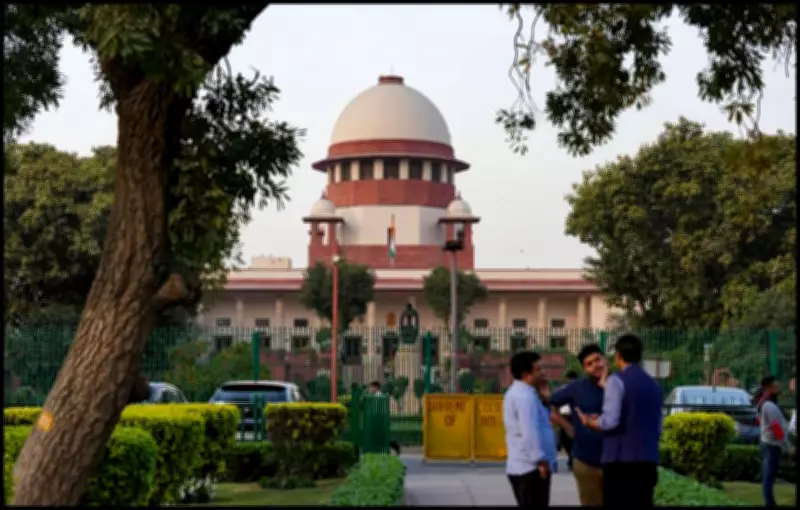
Supreme Court Takes Up Challenges to Data Protection Law Provisions
The Supreme Court of India has formally issued a notice to the central government, seeking its response on a series of petitions that challenge certain provisions of the Digital Personal Data Protection Act, 2026. This legal development marks a significant step in the ongoing debate over data privacy and governmental authority in the digital age.
Legal Proceedings and Key Issues
Multiple petitions have been filed before the apex court, arguing that specific sections of the Digital Personal Data Protection Act, 2026, infringe upon fundamental rights, particularly the right to privacy. The court's notice requires the central government to submit a detailed reply, outlining its stance on the contested provisions. This move initiates a judicial review process that could have far-reaching implications for data governance in India.
The petitions highlight concerns about the balance between data protection and state powers, with critics alleging that certain clauses grant excessive authority to the government, potentially undermining individual privacy safeguards. The Supreme Court's intervention underscores the importance of ensuring that data protection laws align with constitutional principles and international standards.
Background and Context of the Act
The Digital Personal Data Protection Act, 2026, was enacted to regulate the processing of personal data in India, aiming to protect citizens' information while facilitating digital innovation. However, since its passage, it has faced scrutiny from privacy advocates, legal experts, and civil society groups who argue that some provisions are overly broad or lack sufficient checks and balances.
Key areas of contention include provisions related to data localization, government access to personal data, and the scope of exemptions for state agencies. The Supreme Court's notice signals a willingness to examine these issues in depth, potentially leading to amendments or clarifications in the law.
Implications for Data Privacy and Governance
The outcome of this legal challenge could significantly impact how personal data is handled in India, affecting businesses, individuals, and government operations. If the court rules in favor of the petitioners, it may necessitate revisions to the Act to enhance privacy protections and limit governmental overreach.
Conversely, a ruling upholding the provisions could reinforce the current framework, providing clarity for data processors and regulators. This case is being closely watched by stakeholders across sectors, as it will shape the future of data protection jurisprudence in the country.
The Supreme Court has scheduled further hearings on the matter, with expectations that the central government's response will be filed promptly. As the proceedings unfold, they are likely to spark broader discussions on the intersection of technology, law, and fundamental rights in an increasingly digital world.