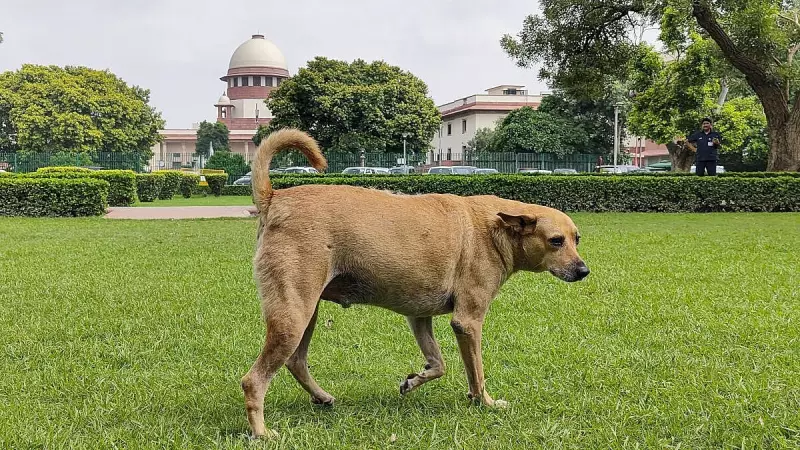
Supreme Court Voices Displeasure Over States' Failure to Comply in Stray Dog Matter
The Supreme Court of India has recently expressed significant irritation and concern regarding the persistent non-compliance of its directives by multiple states in the ongoing stray dog case. This issue has been a focal point of judicial scrutiny, aiming to address the management and welfare of stray dogs across the country.
Amicus Curiae Highlights State Initiatives and Shortcomings
Senior advocate Gaurav Agarwal, who has been appointed as the amicus curiae in this critical matter, provided a comprehensive summary of the initiatives undertaken by different states. In his report, Agarwal detailed the various measures implemented to tackle the stray dog population and ensure public safety. However, he also flagged numerous deficiencies and gaps in these efforts, pointing out that many states have failed to fully adhere to the court's orders.
The Supreme Court's frustration stems from the lack of uniform and effective implementation of its directives, which were designed to create a cohesive national strategy for handling stray dogs. The court emphasized that such non-compliance undermines the judicial process and hampers progress in resolving this long-standing issue.
Implications for Public Health and Safety
This case holds substantial implications for public health and safety in India, as stray dogs can pose risks such as rabies transmission and public nuisance. The Supreme Court's insistence on compliance underscores the urgency of developing robust and consistent policies across all states to mitigate these risks.
As the matter continues to unfold, the court has urged states to take immediate corrective actions and submit detailed compliance reports. The involvement of Gaurav Agarwal as amicus curiae is expected to facilitate a more thorough review and monitoring of state-level initiatives, ensuring that the court's orders are not merely theoretical but translate into tangible outcomes on the ground.