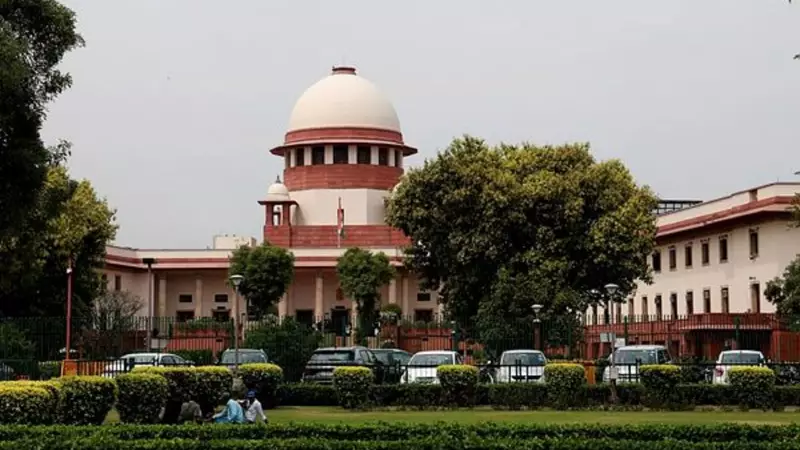
The Supreme Court of India, in a significant ruling on Monday, granted bail to five individuals accused in the larger conspiracy case related to the 2020 Delhi riots. However, the apex court simultaneously imposed a stringent set of eleven conditions on the accused, severely restricting their activities until the conclusion of the trial.
Bail Granted to Five, Denied to Two Key Accused
A bench led by Justice Aravind Kumar delivered the verdict, which presented a mixed outcome for the accused. While Umar Khalid and Sharjeel Imam were denied bail, the court ordered the release of five others: Gulfisha Fatima, Meeran Haider, Shifa Ur Rehman, Mohammad Salim Khan, and Shadab Ahmad. The decision, dated January 5, 2026, underscores the court's cautious approach in a case of national importance.
The Eleven Stringent Bail Conditions Explained
The bail is not unconditional. The Supreme Court laid down a comprehensive list of restrictions to ensure the accused do not influence the trial or disrupt public order. The key conditions include:
Financial and Territorial Restrictions: Each accused must furnish a personal bond of Rs 2 lakh with two local sureties of the same amount. They are prohibited from leaving the National Capital Territory of Delhi without prior court permission and must surrender their passports immediately.
Monitoring and Reporting: The accused are mandated to appear twice a week at the concerned police station to mark their attendance. They must also provide their current residential addresses, contact numbers, and email IDs to the Investigating Officer and the trial court, informing them of any change at least seven days in advance.
Restrictions on Speech, Assembly, and Media
Some of the most notable conditions curtail the accused's freedom of expression and association. They are barred from participating in any programme, address, gathering, rally, or meeting, whether physically or virtually. This extends to a complete ban on publishing or disseminating any information, statement, article, or post concerning the case on any platform, including print, electronic, or social media.
Furthermore, they are prohibited from circulating any posts, handbills, posters, or banners in any form. A critical condition forbids them from contacting, influencing, or intimidating any witness or person connected with the proceedings.
Cooperation with Trial: The accused must fully cooperate with the trial, appear on every hearing date, and not engage in any conduct that could delay the proceedings. They are also required to maintain peace and good behaviour. The prosecution retains the liberty to seek revocation of their bail if any offence is committed during the trial's pendency.
Implications and the Path Forward
This ruling highlights the judiciary's attempt to balance the fundamental right to liberty with the necessities of a fair trial and public safety in a sensitive case. The extensive conditions aim to isolate the accused from the public sphere and prevent any potential obstruction of justice while the legal process runs its course. The trial court will now monitor strict compliance with these directives as the case continues to unfold.