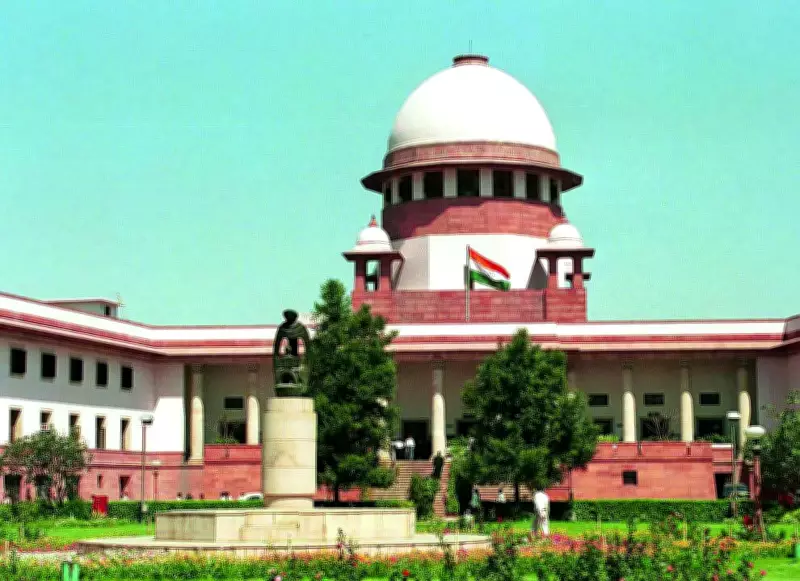
The Supreme Court of India on Wednesday raised serious concerns about the substantial financial losses, commonly referred to as haircuts, being incurred by creditors during proceedings under the Insolvency and Bankruptcy Code (IBC). This judicial scrutiny emerged during discussions about the controversial sale of the bankrupt Reliance Communications, part of the Anil Ambani group, which was acquired at a significantly reduced price by Mukesh Ambani's Reliance Jio.
Government Acknowledges the Issue
Solicitor General Tushar Mehta informed the court that the Government of India is actively and seriously examining this problematic aspect of IBC proceedings. He stated, "Apropos the Supreme Court's concern, the government of India is seriously looking into this issue arising in IBC proceedings. I cannot elaborate as I am part of that discussion. It is receiving very serious consideration at the appropriate quarter." This acknowledgment highlights the gravity with which authorities are treating the matter.
Details of the Reliance Communications Sale
Advocate Prashant Bhushan presented startling figures to a bench comprising Chief Justice of India Surya Kant and Justices Joymalya Bagchi and Vipul M Pancholi. He revealed that Reliance Communications had outstanding dues amounting to a staggering Rs 47,000 crore. However, during the bankruptcy proceedings, the company was sold for a mere Rs 455 crore, which represents approximately 1% of the total outstanding amount. Notably, the buyer was a company owned by the seller's brother, raising questions about the transaction's fairness and transparency.
Judicial Observations on IBC Misuse
The CJI-led bench expressed strong disapproval, noting that IBC proceedings are increasingly being misused in contemporary times. The bench observed, "Unfortunately, IBC proceedings are misused nowadays. The assets of a company in debt are undervalued. Then it is put on a sham auction and, in a planned manner, a family member or a friend buys it." The judges added that such cases are becoming a daily occurrence before the court, indicating a systemic issue.
Solicitor General Mehta described the haircut suffered by creditors as "phenomenal," underscoring the severe financial impact. Bhushan further pointed out an unusual pattern: "Surprisingly, bankruptcy is declared by the very company which is facing bankruptcy." This practice allows companies to initiate proceedings that may not be in the best interest of creditors.
Concerns Over Valuation and Professional Conduct
Chief Justice Surya Kant remarked on what he termed a "nice plan," where companies voluntarily declare bankruptcy and then undergo valuation by friendly appraisers at a fraction of the market value. He lamented, "Unfortunately, the conduct of resolution professionals is not above board." This statement reflects deep-seated concerns about the integrity and impartiality of professionals involved in the resolution process.
Proposed Solutions and Judicial Directions
Senior advocate Mukul Rohatgi, representing the Anil Ambani group, defended the sale as a public process, regardless of the buyer's identity. He suggested an alternative approach: instead of launching investigations and prosecutions, the court could appoint a committee of experts to estimate the dues from ADAG (Anil Dhirubhai Ambani Group). The group could then repay this amount in instalments over time, which he argued would serve the purpose effectively.
However, the bench rejected this proposal and directed a thorough investigation by the Central Bureau of Investigation (CBI) and the Enforcement Directorate (ED). The court emphasized the need to get to the bottom of the case, stating, "We will monitor the investigations, and if we find them to be slack in probing the cases, we will pass appropriate directions." This judicial oversight aims to ensure accountability and prevent any laxity in the investigative process.
Broader Implications for IBC Framework
This case highlights critical flaws in the implementation of the Insolvency and Bankruptcy Code, which was designed to expedite debt resolution and protect creditor interests. The Supreme Court's intervention signals a potential need for reforms to prevent undervaluation of assets, sham auctions, and insider transactions. As the government reviews the issue and investigations proceed, stakeholders in the financial and corporate sectors will be closely watching for outcomes that could reshape IBC practices and restore confidence in India's bankruptcy resolution mechanism.