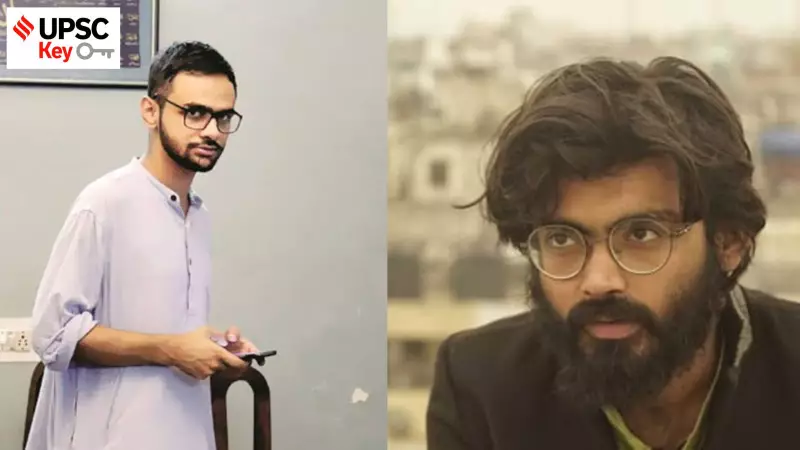
In a landmark ruling with significant implications for national security law and civil liberties, the Supreme Court of India on Monday, January 6, 2026, denied bail to activists Umar Khalid and Sharjeel Imam in the 2020 Northeast Delhi riots conspiracy case. The judgment, delivered by a bench comprising Justices Aravind Kumar and NV Anjaria, not only created a "hierarchy of offenders" but also expanded the judicial interpretation of what constitutes a "terrorist act" under the stringent Unlawful Activities (Prevention) Act (UAPA).
Bail Denied for "Ideological Drivers," Granted for "Local Facilitators"
The court's central theme was an "individualised assessment of culpability." It distinguished sharply between the roles of the accused. The bench found that the prosecution material placed Umar Khalid and Sharjeel Imam at the apex of the alleged conspiracy, describing them as the "ideological drivers" and "masterminds" who were involved in "conceptualisation, direction, orchestration, or mobilisation."
The court stated their alleged strategy was to convert protests against the Citizenship (Amendment) Act into disruptive chakka jams (road blockades) to paralyze Delhi. Consequently, the statutory bar on bail under the UAPA was held to operate with full force against them.
In contrast, the Supreme Court granted conditional bail to five other co-accused in the same case. It characterized them as "local-level facilitators" or "site-level executors" whose roles were "derivative," meaning they acted on directions from the top tier. The court reasoned that keeping these "minor participants" in indefinite custody, with the investigation complete and the trial lagging, would be disproportionate. However, Khalid and Imam were given liberty to renew their bail pleas after one year or upon completion of examination of protected witnesses, whichever is earlier.
Broadening the Definition of a "Terrorist Act" Under UAPA
One of the most critical legal aspects of this ruling is its interpretation of Section 15 of the UAPA, which defines a terrorist act. The defence had argued that organising protests and road blockades amounted to political dissent, not terrorism. The Supreme Court rejected this argument emphatically.
The bench clarified that Section 15 is not limited to acts involving conventional weapons like bombs or firearms. It noted that the definition includes acts done using "any other means of whatever nature" that are likely to threaten India's unity, integrity, security, economic security, or sovereignty, or to strike terror among people.
The court accepted the prosecution's theory that "sustained choking of arterial roads" and the "systemic disruption of civic life" were not benign protests but calibrated acts. It held that when such blockades are designed to cause a public order breakdown and are synchronised with major events—such as the 2020 visit of the then US President Donald Trump—they prima facie attract the definition of a terrorist act under the UAPA.
Delay in Trial Not an Automatic "Trump Card" for Bail
The accused had argued for bail citing prolonged incarceration since 2020, with the trial still at the stage of framing charges. They relied on the Supreme Court's 2021 ruling in Union of India v. K.A. Najeeb, which allowed constitutional courts to grant bail under the UAPA if there is no likelihood of a speedy trial, to protect Article 21 rights.
The bench, however, clarified that delay does not operate as an automatic "trump card." It serves as a trigger for heightened judicial scrutiny but must be balanced against the gravity of the offence and the accused's role. For the alleged "masterminds," the court found that the gravity of the offence and their "conspiratorial centrality" outweighed the factor of delay. It also noted the delay was partly due to voluminous evidence and procedural objections from the defence.
Key Takeaways for UPSC Aspirants
This judgment is a crucial current affair for UPSC Civil Services Examination (CSE) preparation, touching multiple segments of the syllabus:
For Prelims (Indian Polity): Understanding the key features of the Unlawful Activities (Prevention) Act (UAPA), 1967, its amendments, and conditions for bail under the Act is essential.
For Mains (GS-II & GS-III):
- GS-II (Governance): Analysis of government policies and interventions for internal security, and issues arising from their design and implementation. The balance between national security and fundamental rights (like personal liberty under Article 21) is a perennial theme.
- GS-III (Internal Security): The definition and challenges of terrorism, the role of laws like UAPA, and the functioning of security agencies are core topics. This judgment directly relates to questions on anti-terrorism laws and human rights concerns.
Previous Year Question Relevance: The themes align with the UPSC CSE Mains 2019 question on analyzing amendments to the UAPA and NIA Act in the prevailing security environment, alongside the reasons for opposition by human rights organizations.
The Supreme Court's ruling underscores the evolving judicial stance on terrorism-related legislation, emphasizing a context-specific and role-based application of stringent laws, making it an indispensable case study for aspirants.