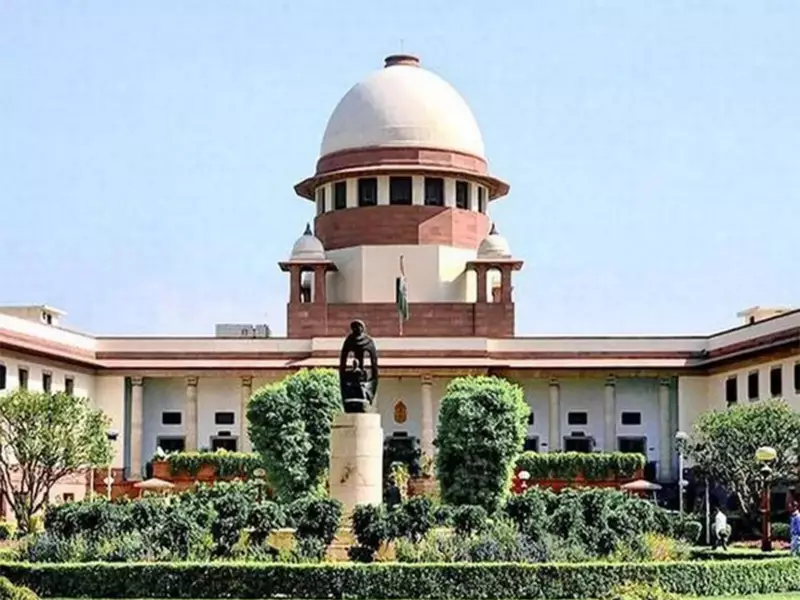
The Supreme Court of India voiced serious concern on Thursday about chaotic scenes that unfolded at the Calcutta High Court. The disturbance occurred during a hearing related to Enforcement Directorate raids on the political consultancy firm I-PAC, which has links to the Trinamool Congress.
Courtroom Chaos Forces Adjournment
Last week, the aftermath of confrontations between the ED and West Bengal Chief Minister Mamata Banerjee regarding the I-PAC raids spilled into the Calcutta High Court. Justice Suvra Ghosh faced what she described as "enormous disturbance and commotion" in her courtroom.
The judge appeared visibly frustrated as her repeated calls for order went unheeded. Lawyers and their apprentices engaged in shouting matches, trying to overpower each other's voices. Ultimately, Justice Ghosh walked out of the courtroom after announcing an abrupt adjournment of the proceedings.

Supreme Court's Strong Reaction
"We are very much disturbed with incidents in Calcutta HC," the Supreme Court stated clearly during its hearing on Thursday. The apex court was addressing petitions connected to the Enforcement Directorate's operations in Kolkata.
Solicitor General Tushar Mehta, representing the ED, presented arguments before a bench comprising Justices Prashant Kumar Mishra and Vipul Pancholi. He alleged a pattern of interference and obstruction by the West Bengal government, including direct involvement by Chief Minister Mamata Banerjee.
Allegations of Systematic Obstruction
Mehta contended that whenever statutory authorities like the ED exercise their legal powers in West Bengal, Banerjee has barged in and disrupted proceedings. "It reflects a very shocking pattern," the Solicitor General asserted. He warned that such actions could demoralize central investigative forces and encourage further obstruction.
The Supreme Court responded to these allegations with gravity. "This is very serious matter, we intend to issue notice and examine the issue," the bench declared regarding the reported obstructions faced by ED officials during their Kolkata raids.
Broader Implications
This incident highlights growing tensions between central investigative agencies and state governments in India. The courtroom commotion raises questions about maintaining judicial decorum during politically sensitive cases.
The Supreme Court's decision to examine the matter indicates the legal system's concern about potential interference with law enforcement activities. The development comes amid ongoing investigations into various political consultancies and their funding sources across the country.
Legal experts suggest that the apex court's intervention could set important precedents regarding the autonomy of central agencies operating in states with opposing political leaderships. The case continues to evolve as both sides prepare their legal arguments.