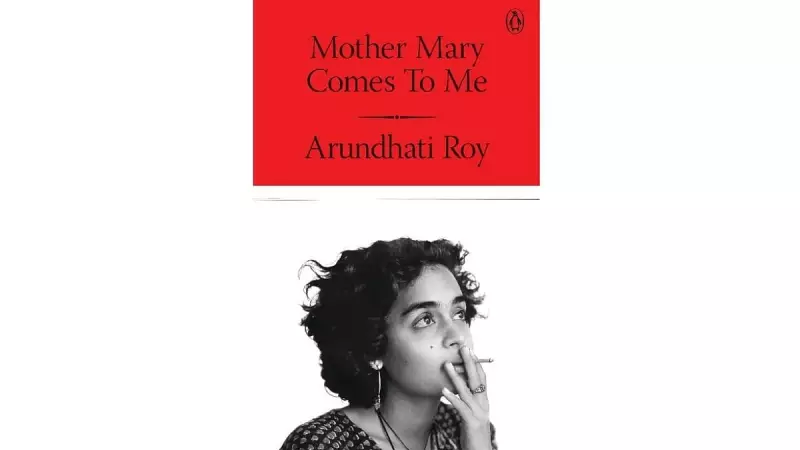
The Supreme Court of India has firmly dismissed a petition that sought to prohibit the sale and distribution of author Arundhati Roy's book, citing its cover image as objectionable. The plea, which argued that the cover depicting Roy smoking a cigarette promoted a bad habit, was rejected by a bench comprising Justices Abhay S Oka and Ujjal Bhuyan.
Court Refuses to be 'Moral Guardian'
The bench, in its order, made a significant observation about the judiciary's role. The Supreme Court explicitly stated it cannot act as the 'moral guardian of the nation' and intervene in such matters. The judges emphasized that the court's function is to interpret the law, not to impose moral or cultural standards on society based on individual complaints.
The petition was filed by a surgeon named Dr. Nandkishore Gattani. He contended that the cover of the book, which features a collection of Roy's non-fiction essays, showed the author smoking. He argued this imagery was harmful, especially for the youth, and violated the Cigarettes and Other Tobacco Products Act (COTPA), 2003, which prohibits the advertisement of cigarettes.
Details of the Petition and Legal Arguments
Dr. Gattani's plea specifically targeted the book titled 'My Seditious Heart: Collected Non-Fiction', published by Penguin Random House India. The petitioner sought several drastic measures from the court, including:
- A complete ban on the sale and distribution of the book.
- Directions to the publisher to change the book's cover.
- Action against the author and publisher for allegedly promoting smoking.
However, the Supreme Court bench found no merit in these arguments. The court noted that the petitioner had not demonstrated how the cover image amounted to an 'advertisement' as defined under the COTPA law. The image was considered a personal photograph of the author, not a promotional tool for tobacco products.
Broader Implications for Free Expression
This ruling reinforces the judiciary's consistent stance on protecting freedom of expression within the constitutional framework. By refusing to entertain the plea, the court has drawn a line against attempts to use judicial avenues for censorship based on subjective moral grounds. The decision underscores that disagreement with content or imagery is not a sufficient legal ground for a ban.
The case also highlights the ongoing tensions between individual sensibilities and artistic freedom in India. While the petitioner represented a viewpoint concerned with public health and morality, the court's dismissal affirms that such concerns must be balanced against the fundamental right to free speech and the practical limits of judicial intervention.
This is not the first time Arundhati Roy's work has been at the center of legal controversy, though this particular challenge was focused solely on the book's cover art rather than its written content. The Supreme Court's swift and clear dismissal sets a precedent for similar future petitions that may seek to regulate creative expression on moralistic grounds.