Supreme Court Rejects Justice Varma's Challenge to Impeachment Panel
The Supreme Court of India has dismissed a plea by Allahabad High Court judge Justice Yashwant Varma. He challenged the legality of a committee set up to investigate impeachment motions against him. A bench comprising Justices Dipankar Datta and S C Sharma delivered the verdict on Friday.
Court Finds No Illegality in Panel Constitution
The bench firmly stated that the Lok Sabha Speaker committed no illegality in constituting the committee. The court held that Justice Varma is not entitled to any relief. It declared that no interference by the court is called for in this matter.
Justice Varma argued his case based on Section 3(2) of the Judges (Inquiry) Act. He contended that the committee could only be established after both the Lok Sabha and Rajya Sabha accepted the impeachment motion. He pointed out that the Deputy Chairman of the Rajya Sabha decided not to admit the motion. This decision came after then-Chairman Jagdeep Dhankar's resignation.
Justice Varma claimed the Deputy Chairman could not assume the Chairman's duties. He argued this action was ultra vires, meaning beyond legal power. The Supreme Court, however, did not accept this argument.
Background of the Controversy
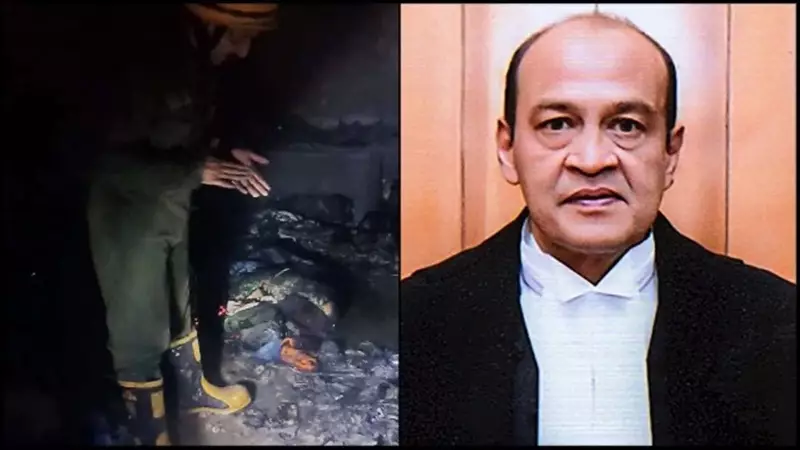
The controversy surrounding Justice Varma began with serious allegations. Cash was reportedly found at his Delhi residence during a fire on the night of March 14 and 15 last year. At that time, he served as a judge of the Delhi High Court.
Following these allegations, several key events unfolded:
- On March 20, the Supreme Court Collegium proposed transferring Justice Varma to Allahabad High Court.
- On March 22, the then Chief Justice formed a three-member committee to probe the allegations.
- The in-house inquiry panel found merit in the allegations against Justice Varma.
- The panel's findings went to the President and Prime Minister for further action.
Justice Varma previously challenged the constitutionality of this in-house inquiry. On August 7, 2025, a two-judge bench dismissed that plea. The bench found no procedural deviation in the inquiry process.
Impeachment Motions and Committee Formation
Subsequently, motions to impeach Justice Varma were introduced in both Houses of Parliament. The Lok Sabha Speaker then appointed a committee under the Judges (Inquiry) Act. This committee investigates the allegations in detail.
The committee includes notable members:
- Justice Manindra Mohan Shrivastava, Chief Justice of the Madras High Court.
- Senior Advocate B V Acharya.
The Supreme Court emphasized the need to balance competing rights. The bench, while reserving its order on January 8, stated they had to consider the judge's rights. They also acknowledged the independent right of members to move and get a motion admitted under the law.
This ruling underscores the judiciary's approach to impeachment procedures. It reaffirms the Speaker's authority in such matters while ensuring legal scrutiny.