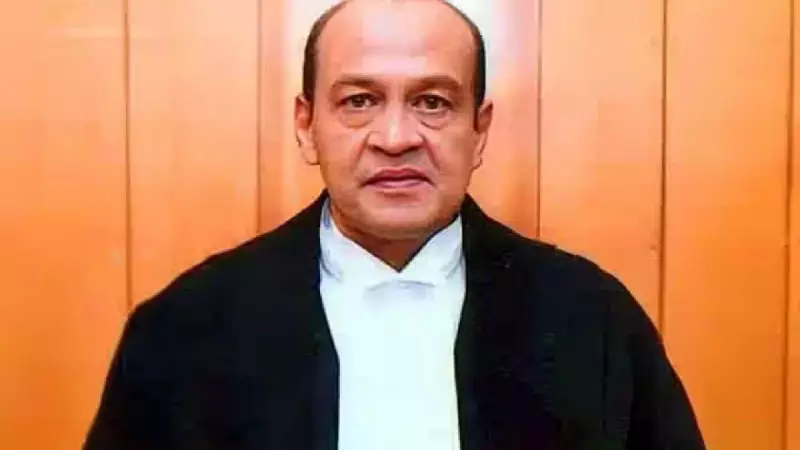
The Supreme Court made a decisive ruling on Friday. It dismissed a plea from Allahabad High Court judge Yashwant Verma. Judge Verma had challenged the Lok Sabha speaker's decision to appoint a committee for his impeachment.
Speaker Forms Investigation Panel
This legal action came after Lok Sabha Speaker Om Birla announced the formation of a three-member panel. The committee was created to investigate serious allegations against Justice Verma. Speaker Birla accepted a motion for impeachment. This motion was signed by 146 Members of Parliament.
Committee Members Named
The impeachment committee includes three notable members. Justice Amit Kumar will serve on the panel. Justice Maninder Mohan Srivastava is also a member. B B Acharya completes the three-person investigative team.

Background of the Case
The Supreme Court had previously addressed this matter in August of last year. At that time, the court ruled that an in-house inquiry procedure had legal sanction. This inquiry led to a recommendation to remove Justice Verma from his position.
Justice Verma had filed an earlier plea with the top court. He challenged the in-house inquiry panel's report. He also contested former Chief Justice of India Sanjiv Khanna's recommendation. That recommendation called for initiating impeachment proceedings against him.
The Fire Incident Allegations
The case centers on a troubling incident at Justice Verma's official residence. A fire broke out at his Delhi home on March 14. Fire tenders responded to the emergency. During their work, they allegedly discovered burnt unaccounted cash at the property.
Important details emerged about the situation. Justice Verma was not present at his house when the fire occurred. He was serving as a sitting judge of the Delhi High Court at that time. The discovery of cash raised serious questions and led to the investigation.
Court's Questioning During Hearing
The Supreme Court conducted a hearing on July 28 to consider Justice Verma's plea. During this session, the court posed several pointed questions to the judge's legal team. Senior Advocate Kapil Sibal represented Justice Verma before the bench.
The justices asked why Justice Verma did not challenge the three-judge in-house inquiry procedure earlier. This procedure was constituted by the Chief Justice of India. The court specifically questioned why the judge appeared before the panel if he believed it was unconstitutional.
The Supreme Court raised another critical issue. They asked why Justice Verma is challenging the procedure only now. His challenge comes after the proceedings have already concluded. This timing raised judicial eyebrows during the hearing.
The Supreme Court's dismissal represents a significant development in this ongoing judicial matter. It upholds the speaker's authority to form impeachment committees. The decision also reinforces previous rulings about in-house inquiry procedures.