
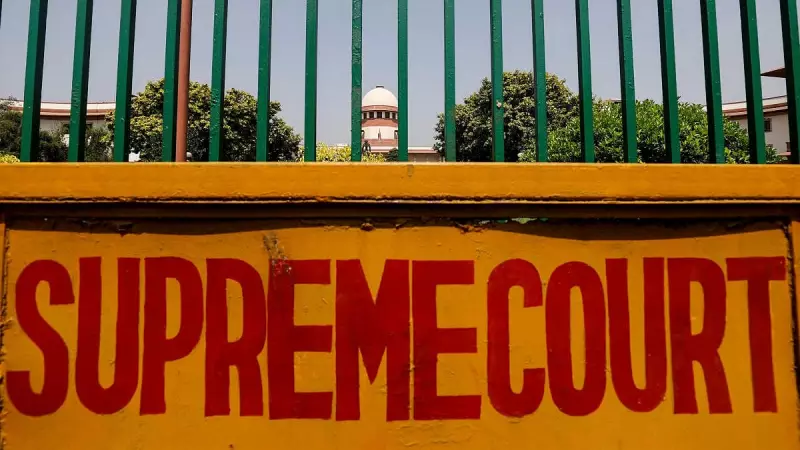
In a landmark clarification, the Supreme Court of India has ruled that an employee receiving a clean chit in departmental disciplinary proceedings cannot seek the automatic quashing of a parallel criminal case, especially in matters involving allegations of bribery. The apex court underscored the fundamental independence of these two legal tracks.
The Core Legal Distinction
The court delivered this significant ruling, emphasizing that disciplinary proceedings and criminal prosecution operate in separate spheres. A decision in one forum does not dictate or govern the outcome in the other. This principle is crucial in maintaining the integrity of criminal law, which operates under a different standard of proof and serves a distinct societal purpose compared to internal employment rules.
The bench highlighted that departmental inquiries are administrative actions designed to assess an employee's conduct and suitability for continued service. Their standard of proof is based on preponderance of probability. In stark contrast, criminal prosecution, particularly in bribery cases, requires proof beyond a reasonable doubt and aims to punish offences against the state and society.
Implications for Employees and Authorities
This judgment has immediate and wide-ranging implications. For public servants or employees facing simultaneous departmental and criminal charges, often stemming from the same incident, the ruling shuts the door on using a favorable disciplinary outcome as a shield in criminal court. Authorities, on the other hand, are reminded to pursue both avenues independently without letting the conclusion of one hinder the other.
The court's position, reported by Ashish Tripathi on January 7, 2026, reinforces a consistent legal view. It prevents a situation where an administrative body's finding could inadvertently undermine a serious criminal investigation into corruption. The Supreme Court has thus fortified the autonomy of the criminal justice system.
Why This Ruling Matters
This clarification is vital for several reasons:
- Upholds the Rule of Law: It ensures that criminal allegations, especially those related to bribery, are adjudicated solely by criminal courts based on evidence presented under the Indian Penal Code or the Prevention of Corruption Act.
- Prevents Misuse: It blocks potential attempts to use departmental exoneration to derail criminal trials.
- Clarifies Procedures: It provides clear guidance to lower courts and tribunals on how to handle petitions seeking quashing of criminal cases based on disciplinary clean chits.
In essence, the Supreme Court has drawn a bright line, affirming that the two processes—one administrative and employment-centric, the other legal and societal—must run their independent courses. The verdict serves as a crucial reminder of the distinct objectives and standards that define disciplinary action and criminal cases in the Indian legal landscape.