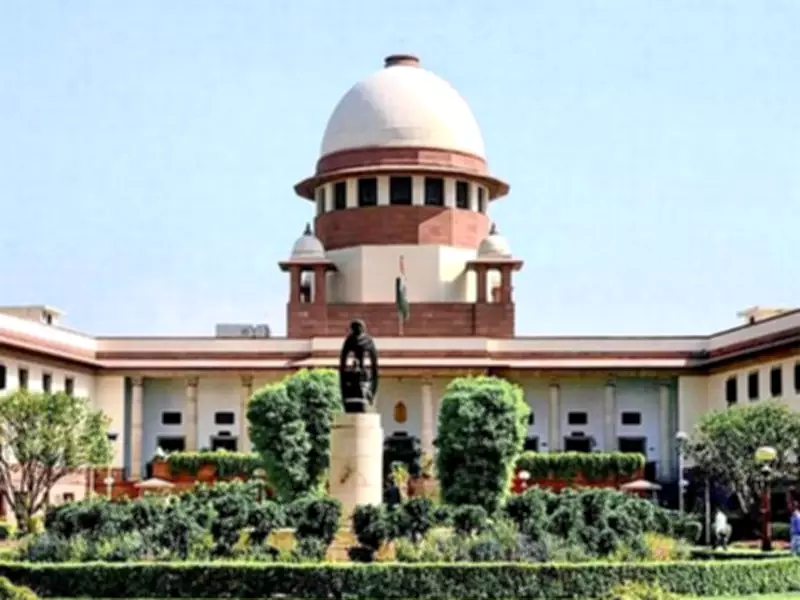
Supreme Court Mandates West Bengal to Clear DA Arrears, Upholds 'Model Employer' Doctrine
In a landmark ruling that reinforces the principle of the state as a 'model employer', the Supreme Court of India on Thursday directed the West Bengal government to pay dearness allowance (DA) arrears to its employees for the period spanning 2008 to 2019. The bench, comprising Justices Sanjay Karol and Prashant Kumar Mishra, firmly rejected the state's plea of financial constraints, asserting that a lack of funds cannot justify denying employees their statutory dues.
Court Sets Strict Deadline and Appoints Monitoring Committee
The Supreme Court has established a clear timeline for compliance, ordering the first installment of payments to be disbursed by March 31. To ensure rigorous implementation of its directive, the court has appointed a high-level monitoring committee. This committee will be chaired by former Supreme Court judge Indu Malhotra and includes former Chief Justice of the Jharkhand High Court Tarlok Singh Chauhan, former High Court judge Goutam Bhaduri, and the Comptroller and Auditor General of India.
State's Financial Difficulty Defense Dismissed as Unacceptable
The court categorically dismissed the West Bengal government's defense that it lacked the necessary funds to fulfill its obligations. The bench emphasized that it is impermissible for a state to evade its responsibility to pay DA on grounds of financial hardship, especially when the obligation stems from legislation enacted by the state itself. The ruling stated, "It is not open for the State to shirk its responsibility of paying DA on account of financial difficulty, given that it is an obligation arising out of a statute of its own creation."
Supreme Court Elaborates on the 'Model Employer' Principle
In its detailed judgment, the Supreme Court elaborated on the critical role of the state as a model employer. The bench observed, "It has often been recognised that the State must set an example for other employers in the country by behaving as a 'model employer'. Such a position should not be difficult to attain given all the advantages that it has." The court highlighted the state's unique powers, including its extensive employment capacity, constitutional authority to tax, ability to borrow, and management of public finances.
The judgment further noted, "Leading by example, fulfilling its financial duties in times of fiscal strain, gives it the moral authority to wield the sword of law against private entities, should they not do so." This underscores the expectation that the state must honor its commitments to maintain credibility and enforce labor laws effectively.
Statutory Obligations Are Not Discretionary, Court Affirms
The Supreme Court reinforced that statutory obligations are binding and not subject to discretionary waivers. It stated, "The least that is expected of a State in a democracy is that it honours its obligations and commitments arising from a legislation or judicial decisions, for such obligations are not discretionary." The court warned that allowing financial constraints as a routine excuse would render such obligations meaningless and could have dangerous implications for employees' rights.
Emphasizing the nature of employees' dues, the judgment clarified, "When it comes to employees' dues, this proposition would be extremely dangerous and stifling since the amounts received thereby are not handouts or acts of charity but are earned compensation/consideration for services given." This highlights that DA payments are a rightful entitlement for services rendered, not a benevolent grant.
The ruling sets a significant precedent for government accountability and employee welfare, ensuring that states cannot bypass statutory dues under the guise of financial limitations. It reaffirms the judiciary's role in upholding the rights of public sector employees and maintaining the integrity of labor laws in India.