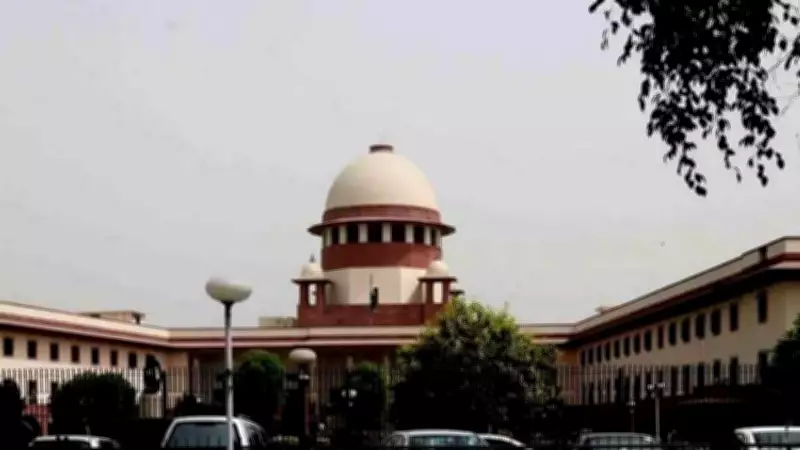
Supreme Court Demands Explanation from Uttar Pradesh Government on IPC Provisions in Noida Hate Crime Case
The Supreme Court of India has taken a firm stance in a significant legal proceeding, directing the Uttar Pradesh government to provide a detailed explanation regarding the handling of a 2021 hate crime case in Noida. In a hearing held on Tuesday, the apex court specifically questioned why relevant provisions of the Indian Penal Code were not invoked during the investigation of this serious incident.
Court's Directives and Government's Response
A bench comprising Justices Vikram Nath and Sandeep Mehta issued a clear directive to the state government, granting a one-week timeframe to seek proper instructions and submit a comprehensive response. This judicial intervention underscores the court's concern over procedural lapses in cases involving hate crimes and religious identity-based violence.
During the proceedings, Additional Solicitor General K M Nataraj, representing the Uttar Pradesh government, informed the court that disciplinary proceedings had been initiated against the investigating officer involved in the case. However, the bench raised pointed questions about whether such administrative actions adequately addressed the core issue of proper case registration under appropriate legal provisions.
Legal Arguments and Petitioner's Claims
Senior advocate Huzefa Ahmedi, appearing for the petitioners, presented compelling arguments that the First Information Report should have been registered under specific IPC sections, particularly sections 153-B (promoting enmity between different groups) and 295-A (deliberate and malicious acts intended to outrage religious feelings). The legal counsel emphasized that these provisions were directly applicable to the nature of the alleged offenses.
The petitioner, who claims to be a victim of what he describes as a "dastardly hate crime," provided detailed accounts of the incident that occurred on July 4, 2021. According to the plea, the individual was subjected to physical abuse, torture, and systematic humiliation by a group of people in Noida. The petitioner specifically mentioned that derogatory remarks targeting his religious identity were hurled during the attack, highlighting the hate crime dimension of the case.
Court's Cautious Approach and Future Proceedings
While the petitioners attempted to broaden the scope of the case by pointing to alleged patterns of similar incidents being overlooked by state authorities, the Supreme Court bench maintained a focused approach. The justices clearly stated their intention to concentrate on the specific incident before them, noting the absence of empirical evidence regarding other similar cases at this stage.
The court has scheduled the next hearing for February 13, 2026, where the Uttar Pradesh government's response will be examined. This case represents an important judicial examination of how hate crime cases are investigated and prosecuted under Indian law, particularly concerning the proper invocation of relevant IPC provisions that address offenses related to religious identity and communal harmony.
The Supreme Court's intervention in this matter highlights the judiciary's role in ensuring that serious crimes, especially those with elements of hate and religious targeting, receive appropriate legal attention and that investigating agencies follow proper procedures in registering and pursuing such cases under the correct sections of the law.