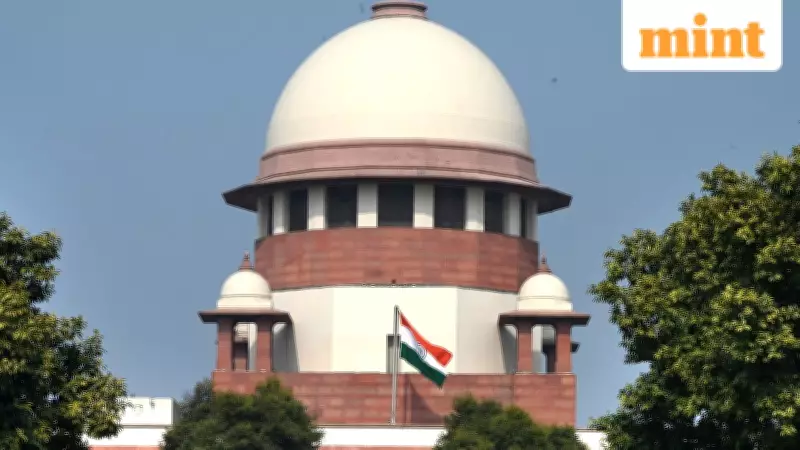
Supreme Court Upholds Minor's Right to Terminate 30-Week Pregnancy
In a landmark decision, the Supreme Court of India has directed the medical termination of a 30-week pregnancy for a 17-year-old minor, firmly stating that courts cannot compel any woman, particularly a minor, to complete an unwanted pregnancy. The ruling, delivered on Friday by a bench comprising Justices B V Nagarathna and Ujjal Bhuyan, underscores the critical importance of reproductive autonomy and the protection of minors in sensitive legal matters.
Court's Directive to Mumbai's JJ Hospital
The bench has instructed Mumbai's Sir JJ Hospital to carry out the medical termination of the pregnancy while ensuring that all necessary medical safeguards are strictly followed. This directive aims to provide a safe and legal pathway for the minor, who became pregnant during a relationship with a neighborhood boy. The court emphasized that the issue at hand is not about the consensual nature of the relationship or whether it involved sexual assault, but rather the minor's right to decide about her own body and future.
Key Observations from the Bench
The Supreme Court bench made several poignant observations during the hearing. Justice Nagarathna highlighted the complex moral and legal questions involved, noting that if the court does not facilitate such terminations, individuals might resort to unsafe methods like visiting quacks or illegal medical establishments, posing severe risks to their health. The bench stated, "If the interest of the mother is to be taken note of, then her reproductive autonomy must be given sufficient emphasis. The court cannot compel any woman, much less a minor child, to complete her pregnancy if she is otherwise not intending to do so."
Furthermore, the court addressed the timing of the termination, questioning why a pregnancy could be terminated at 24 weeks but not at 30 weeks if the individual's unwillingness to continue is clear. "Ultimately, she doesn't want to continue the pregnancy. Bottom line is she doesn't want to give birth, that is the difficulty," the bench observed, acknowledging the emotional and practical challenges faced by the minor.
Medical and Legal Considerations
The court reviewed a report from the hospital's medical board, which indicated that there was no immediate threat to the life of the minor or the fetus if the pregnancy were carried to full term. However, the bench prioritized the minor's consistent unwillingness to continue the pregnancy over other factors. It noted that the pregnancy was "illegitimate" in nature, as the minor herself is underage, and the situation arose from an unfortunate relationship.
During the proceedings, counsel for the Maharashtra government suggested that the child could be placed in an orphanage if the mother did not wish to keep it. However, the Supreme Court maintained its focus on the minor's reproductive rights and autonomy, rejecting this as a sufficient reason to compel continuation of the pregnancy.
Broader Implications and Future Steps
This ruling highlights the ongoing challenges and exceptions under the Medical Termination of Pregnancy (MTP) Act of 1971, which typically sets limits on termination timelines. The court acknowledged that many cases involve terminations beyond the stipulated periods, and without legal avenues, individuals may turn to dangerous alternatives. "Where will such people go? To quacks and unauthorised doctors. That will be dangerous," the bench warned, advocating for a more compassionate and practical approach in such scenarios.
The Supreme Court has announced that it will release the operative part of the order immediately for the hospital's benefit, with a detailed judgment to follow. This decision is expected to set a precedent for similar cases, reinforcing the legal framework around reproductive rights and the protection of minors in India.