MLA Rohit Pawar Seeks Discharge in MSCB Money Laundering Case
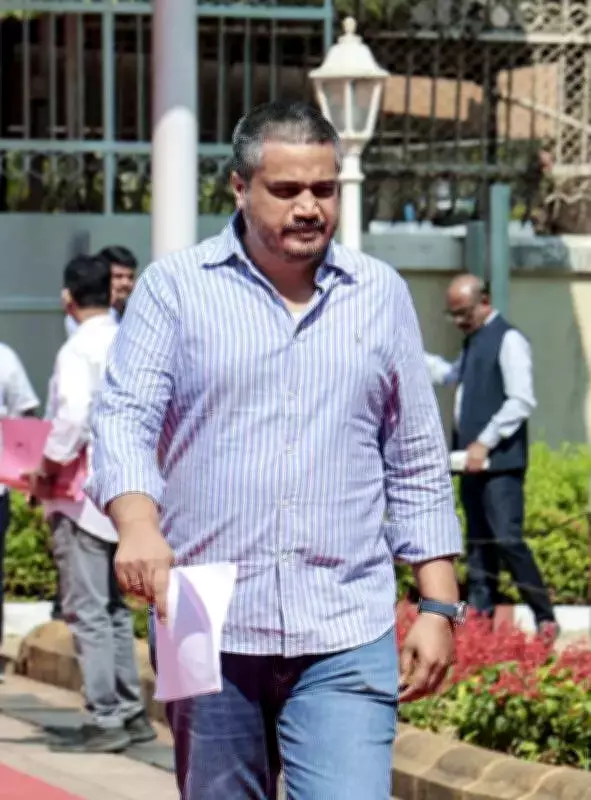
In a significant legal development, MLA Rohit Pawar and several other accused in the money laundering case linked to the Maharashtra State Co-operative Bank (MSCB) scam have recently moved a special court seeking discharge. The court has directed the prosecution to submit its reply, marking a crucial phase in this high-profile financial investigation.
Pawar's Defense and Legal Arguments
In his plea filed through advocate Kushal Mor, Rohit Pawar argued that there is no evidence of money laundering against him. He emphasized the closure of the predicate or scheduled offence, which forms the foundation for the money laundering case under the Prevention of Money Laundering Act (PMLA), 2002. This legal stance is bolstered by a Supreme Court ruling from July 27, 2022, which states that a PMLA case cannot proceed without a predicate offence.
The Mumbai police's Economic Offences Wing (EOW) had submitted a second closure report in the Rs 25,000 crore MSCB scam case last week, giving a clean chit to late Ajit Pawar, Deputy Chief Minister Sunetra Pawar, and their nephew Rohit Pawar. Special judge Mahesh K Jadhav accepted this report and rejected the Enforcement Directorate's (ED) plea to intervene and oppose the closure, highlighting the complexities in the legal proceedings.
Background of the Case and ED's Involvement
The money laundering case originates from an August 2019 FIR filed by the EOW. In June 2025, the ED filed a chargesheet against Rohit Pawar, his close associate Rajendra Ingwale, and the Agro firm, marking the third chargesheet in a case involving 17 accused, including firms. Previously, the court had taken cognisance of an ED chargesheet against Pawar, observing that he prima facie "knowingly participated in this fraudulent acquisition."
Pawar, a legislator from the NCP (SP), has been questioned twice by the ED. The court noted that the auction process of M/s. Kannad Sahkari Sakhar Kharkhana Ltd. was marred by fraudulent practices, with the factory revalued at Rs 75 crores in March 2013 shortly after the auction, suggesting undervaluation. It pointed to a pre-arranged scheme between Baramati Agro Ltd. and Hi-Tech Engineering Corporation Pvt. Ltd. to acquire the factory at a suppressed price, implicating Pawar and Ingwale.
Implications and Next Steps
As the prosecution prepares its reply, the case underscores the intricate interplay between predicate offences and money laundering charges. The outcome could set a precedent for similar financial fraud cases in India, impacting political and corporate accountability. Stakeholders are closely watching for the court's final decision on the discharge plea, which will determine the future course of this long-standing investigation.