Rajasthan Honour Killing Bill: Governor Returns Legislation Amid Legal Concerns
The Rajasthan Prohibition of Interference with the Freedom of Matrimonial Alliances in the Name of Honour and Tradition Bill, passed during the Ashok Gehlot government's tenure (2018-2023), has been returned by Governor Haribhau Bagade. This significant development raises questions about the necessity of such legislation and its alignment with existing national laws.
The Urgent Need for the Bill
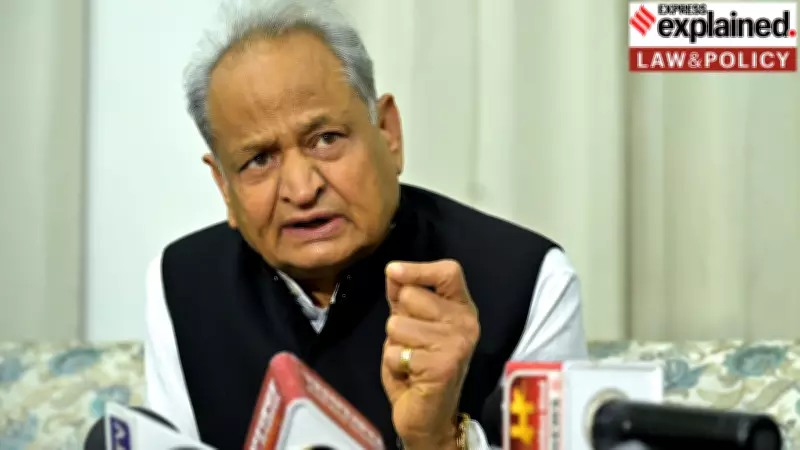
Chief Minister Ashok Gehlot, who was also the minister in charge, highlighted the pressing need for this legislation. He noted a "spurt in illegal intimidation by self-appointed bodies" targeting Sagotra marriages and inter-caste, inter-community, and inter-religious unions between consenting adults. These actions, often justified in the name of upholding family, caste, or community honour, have led to severe consequences.
Gehlot emphasized that such bodies have incited violence, resulting in newly-married couples or those wishing to marry being subjected to intimidation, violence, and even murder. While these acts are offences under the Indian Penal Code, the Bill aimed to specifically prevent assemblies that condemn such alliances and impose stricter penalties.
Key Provisions of the Bill
The Bill introduced several critical definitions and measures to combat honour-based violence:
- Unlawful Assembly: Defined as gatherings with the intention to deliberate on or condemn any legally permissible marriage, claiming it dishonours caste or community traditions.
- Endangerment of Liberty: Includes counselling, exhorting, or pressuring individuals to prevent or disapprove of a marriage, whether openly or covertly.
- Technological Means: The definition of "assemble," "congregate," or "gather" extended to actions coordinated through social media or other digital platforms.
- Accountability for Ostracisation: Held individuals accountable for pressuring couples or their families to leave villages, dispossessing them of property, or imposing fines.
- Preventive Measures: Directed District Magistrates (DMs) or Sub-Divisional Magistrates (SDMs) to prohibit such unlawful assemblies.
All offences under the Bill were classified as cognisable, non-bailable, and non-compoundable, ensuring swift legal action.
Penalties Outlined in the Legislation
The Bill proposed stringent punishments to deter honour-based crimes:
- Unlawful Assembly: Imprisonment from six months to five years and fines up to ₹1 lakh.
- Endangering Liberty: Two to five years imprisonment and fines up to ₹1 lakh for creating a hostile environment.
- Criminal Intimidation: Up to seven years imprisonment.
- Simple Hurt: Three to five years imprisonment and fines up to ₹2 lakh.
- Grievous Hurt: Minimum ten years imprisonment, extendable to life, with fines up to ₹3 lakh.
- Death: Punishment with death, life imprisonment, or fines up to ₹5 lakh for causing the death of a couple or either individual.
Why the Governor Returned the Bill
The Bhajan Lal Sharma government provided specific grounds for returning the Bill. It argued that the 2019 legislation references sections of the Indian Penal Code (IPC) and the Code of Criminal Procedure (CrPC) that have since been repealed. Additionally, the government contended that Section 103 of the Bharatiya Nyaya Sanhita (BNS), 2023, adequately addresses honour killings by prescribing death or life imprisonment for murder, along with fines.
This move highlights the ongoing debate between state-specific laws and overarching national legislation, particularly in the context of recent legal reforms.
Similar Laws in Other States
Currently, no other state in India has enacted a similar law. However, there are emerging efforts to address honour killings:
- Karnataka: The Siddaramaiah-led Congress government is drafting a Bill to tackle honour killings as a distinct crime category and protect marital freedom.
- Tamil Nadu: Chief Minister M.K. Stalin announced a commission in December last year to recommend legal and policy measures to prevent honour killings.
- National Level: In 2011, the Law Commission of India proposed the draft Prohibition of Unlawful Assembly (Interference with the Freedom of Matrimonial Alliances) Bill, but it was never enacted.
The return of Rajasthan's Bill underscores the complexities in legislating against honour-based violence, balancing state initiatives with federal legal frameworks. As discussions continue, the focus remains on safeguarding individual freedoms and ensuring justice for victims of such crimes.