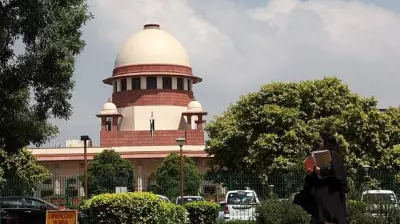
Patna High Court Criticizes Waqf Tribunal, Overturns Order Halting National Highway Construction
The Patna High Court has expressed strong disapproval of the functioning of the state's Waqf tribunal, which had issued a prohibitory order obstructing work on a critical national highway project in Bihar. The tribunal's chairman had halted the project due to the presence of a mosque and a graveyard on land acquired for the development.
In a stern rebuke, the high court stated, "It is not acceptable that a judicial officer fails in appreciating law and keeps in mind the interest of a particular community." This observation came as the court quashed the tribunal's order from May 15 of the previous year, which had restrained the National Highways Authority of India (NHAI) from carrying out construction on a national highway connecting Bihar with Assam, part of the East-West Corridor, in the Mohiuddinpur Razwa locality of Samastipur district.
Verdict Delivered by Justice Bibek Chaudhuri
A single bench of Justice Bibek Chaudhuri delivered the verdict on Tuesday, allowing an appeal filed by the NHAI. The court's decision underscores the primacy of the NHAI Act over the Waqf Act in matters of land acquisition for national infrastructure projects.
NHAI counsels Maurya Vijay Chandra and Gaurav Govind argued that the tribunal's prohibitory order was overriding in nature, as the Waqf Act, 1995 (amended in 2025), does not confer any power on the tribunal to hear matters related to land acquisition carried out under the NHAI Act. They emphasized that the tribunal had overstepped its jurisdiction by interfering with a project governed by specific national legislation.
Harmonious Relocation Precedent Cited
The counsels also drew the court's attention to a recent instance where a religious structure obstructing the construction of a national highway connecting Bhojpur with Patna was relocated harmoniously, in accordance with court rulings. This example highlighted that such issues can be resolved without halting critical infrastructure development, ensuring both legal compliance and community sensitivity.
Justice Chaudhuri, while making strong observations against the tribunal's chairman, held that the special provisions governing land acquisition under the NHAI Act cannot be bypassed by a tribunal functioning under the Waqf Act. The ruling reinforces the legal framework that prioritizes national infrastructure projects, while also acknowledging the need for balanced approaches in handling religious and community concerns.
Implications for Future Infrastructure Projects
This verdict sets a significant precedent for similar cases across India, where land acquisition for national projects might intersect with religious or community properties. It clarifies that tribunals under specific acts, such as the Waqf Act, must operate within their designated legal boundaries and cannot override the provisions of central legislation like the NHAI Act.
The Patna High Court's decision is expected to expedite the stalled national highway project, which is crucial for enhancing connectivity between Bihar and Assam, thereby boosting economic growth and regional development. The court's emphasis on judicial officers adhering to the law without bias underscores the importance of impartiality in legal proceedings affecting public infrastructure.