Pakistan Confronts Dual Strategic Threat as Regional Conflicts Converge
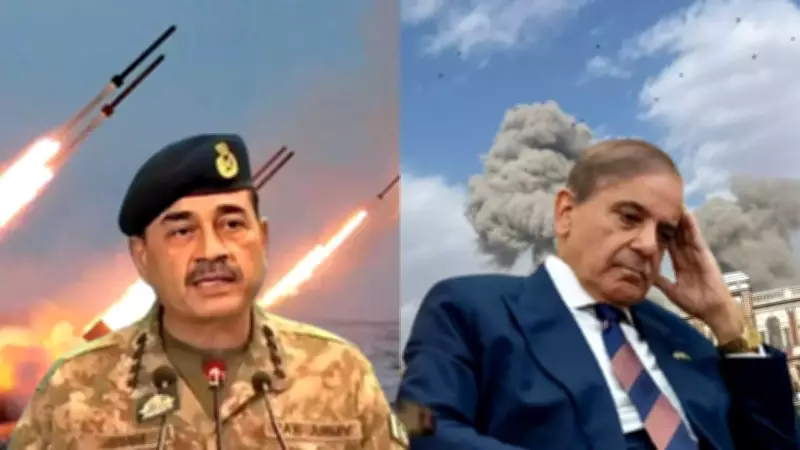
As the United States and Israel launch coordinated military strikes against Iran, Pakistan finds itself caught in a precarious position while simultaneously engaged in dangerous military escalation with neighboring Afghanistan. This convergence of conflicts creates what analysts describe as a "two-front strategic squeeze" that threatens to destabilize Pakistan's already fragile security and economic landscape.
Regional Crisis Intensifies with US-Israel Strikes on Iran
The regional situation escalated dramatically when Israel initiated preventive missile strikes against Iranian targets, with American media confirming Washington's participation in coordinated operations alongside its ally. Multiple explosions were reported in Tehran, prompting Israel to declare a nationwide state of emergency and shift its Home Front Command guidelines from full activity to essential operations only.
Iranian state media confirmed blasts in the capital city, while connectivity disruptions were reported across parts of Tehran. Iranian authorities vowed a "crushing response" to the attacks, even as the Israel Defense Forces detected ballistic missiles launched from Iranian territory toward Israel, urging citizens to seek protected spaces immediately.
US President Donald Trump confirmed that the United States had initiated "major combat operations in Iran," describing Tehran as "very difficult" and "very dangerous" while stating that Washington faced a "big decision" in ongoing negotiations. These military actions occurred despite diplomatic efforts between the US and Iran, with a third round of talks recently held in Geneva before the sudden escalation cast doubt on any immediate diplomatic breakthrough.
Pakistan's Existing Conflict with Afghanistan Intensifies
Even before the Iran escalation, Pakistan had launched air strikes on cities in neighboring Afghanistan following months of cross-border attacks. Islamabad's Information Minister Attaullah Tarar described the situation bluntly, stating that "now it is open war" between the two nations.
The fighting followed retaliatory exchanges between Afghan forces and Pakistani troops along their disputed frontier, with contested casualty figures and sharply different claims about losses inflicted on both sides. At the heart of the dispute lies Pakistan's long-standing accusation that the Afghan Taliban government has failed to rein in the Tehreek-e-Taliban Pakistan (TTP), which has significantly increased attacks inside Pakistan since the Taliban returned to power in Kabul in 2021.
Afghanistan's Taliban authorities continue to deny allowing their territory to be used against Pakistan, but militant violence inside Pakistan has surged dramatically, deepening mistrust between the neighboring countries. Diplomatic efforts involving Qatar, Turkey, Saudi Arabia and Iran have failed to produce a durable ceasefire, while China has called for restraint and urged both sides to resolve disputes through dialogue.
The Critical Balochistan Factor in Regional Instability
The most immediate concern for Pakistan in the event of a prolonged Iran conflict involves potential spillover effects into Balochistan province, which borders both Afghanistan and Iran. This strategically crucial region has long been a theatre of insurgency led by groups such as the Baloch Liberation Army (BLA) and hosts vital infrastructure including the China-Pakistan Economic Corridor (CPEC) and the Gwadar port.
Unrest in Iran's Sistan-Baluchestan province could energize cross-border ethnic linkages and embolden separatist elements on both sides of the international boundary. Any weakening of Iranian state control in border areas could create operational space for militants, smugglers and insurgent networks to expand their activities.
Pakistan has historically cooperated with Iran on border security through joint patrols and intelligence sharing arrangements. However, if Iran becomes consumed by war with Israel and the United States, its ability to coordinate effectively on border control measures may be severely reduced. An emboldened BLA, potentially operating in tandem with other militant groups, could stretch Pakistani security forces thin at a time when they are already heavily deployed along the Afghan frontier.
Strategic Overstretch and Military Resource Allocation Challenges
Pakistan's military doctrine has traditionally been India-centric, focusing primarily on deterrence along its eastern border. Recent years have forced a significant recalibration toward internal security and western border management priorities, creating complex resource allocation challenges.
Relations with India remain in deep freeze less than a year after their worst conflict since 1971, with cross-border exchanges and diplomatic ties remaining limited and trust at minimal levels. A simultaneous crisis with Afghanistan combined with instability spilling over from Iran would leave Pakistan managing acute tensions on its western front while maintaining vigilant watch on its eastern border with India.
This scenario risks significant strategic overstretch, requiring careful division of troop deployments, intelligence resources and air assets across multiple potential conflict theatres. Any miscalculation in this complex environment could prove exceptionally costly for regional stability and Pakistan's national security interests.
Economic Shockwaves from Regional Energy Market Disruptions
Beyond immediate security concerns, a war involving Iran carries substantial economic ramifications for Pakistan. As a key regional energy player, any disruption to Iranian oil supplies or significant spikes in global crude prices would directly impact Pakistan's already fragile economy, which continues to struggle with inflation, external debt pressures and currency volatility.
The Strait of Hormuz represents a particularly critical vulnerability, as a substantial portion of global oil shipments transits this narrow waterway. Military escalation in the Gulf region would ripple across international energy markets, driving up import costs for energy-dependent nations like Pakistan.
Pakistan also maintains important trade routes and informal cross-border commerce with Iran. Border closures or increased insecurity could disrupt livelihoods in already impoverished border regions, while foreign investment could suffer additional setbacks as international investors reassess risk in a region marked by simultaneous conflicts.
China's Delicate Regional Balancing Act
China, a close strategic partner of Pakistan, has urged both Pakistan and Afghanistan to exercise restraint and reach a sustainable ceasefire agreement. Beijing maintains diplomatic ties with both Kabul and Islamabad through established tripartite mechanisms, but also possesses substantial energy and infrastructure interests throughout the Gulf region.
An expanded Iran conflict significantly complicates China's regional balancing act. For Pakistan, which relies heavily on Chinese investment and diplomatic backing, Beijing's shifting priorities could prove consequential. If China redirects focus toward stabilizing the Gulf or protecting its own regional assets, Islamabad may find itself with reduced direct support in managing western border turbulence and associated security challenges.
Diplomatic Efforts Face Mounting Challenges
With US-Iran nuclear talks disrupted and Pakistan-Afghanistan dialogue stalled, diplomatic initiatives appear increasingly marginalized in the current crisis environment. Regional actors including Saudi Arabia, Qatar and Turkey have attempted mediation in the Pakistan-Afghanistan dispute, while Iran had previously signaled willingness to facilitate dialogue between the parties.
Now, with Tehran under direct military pressure from US-Israeli operations, its capacity to play effective mediator has diminished substantially. Pakistan's diplomatic options continue to narrow as it must simultaneously manage tensions with Kabul, prevent insurgent escalation in Balochistan, guard against spillover effects from Iran, and avoid provoking additional instability along its eastern frontier with India.
Oil Market Vulnerability and Economic Recovery Risks
A sustained rise in global oil prices, particularly if coupled with disruption in the Strait of Hormuz, could deliver a sharp external shock to Pakistan's fragile economic recovery. The country imports the majority of its crude oil and refined petroleum products, making it highly vulnerable to price volatility in international energy markets.
Even moderate spikes in Brent crude prices can widen Pakistan's import bill by billions of dollars annually, exerting fresh pressure on its current account balance and foreign exchange reserves. Higher energy costs would likely feed directly into domestic inflation, potentially reversing recent gains in price stability achieved through difficult economic reforms.
Transportation, electricity generation and fertilizer production sectors remain heavily dependent on imported fuel. As input costs rise throughout the economy, the impact would cascade through food prices and manufacturing sectors, squeezing household purchasing power and dampening consumer demand. For a government attempting fiscal consolidation under International Monetary Fund oversight, the policy dilemma becomes particularly acute: either pass higher fuel prices to consumers and risk public anger, or absorb part of the shock through subsidies, thereby straining already constrained public finances.
Converging Crises Create Unprecedented Strategic Challenges
What makes this moment particularly perilous for Pakistan involves the convergence of multiple crises unfolding simultaneously. An active conflict with Afghanistan has already heated up one western front, while a war involving Iran threatens to destabilize another border region. Simultaneously, the eastern border with India remains tense, with bilateral relations still strained following recent hostilities.
The cumulative effect represents significant strategic compression, with Islamabad facing substantial pressure from nearly every geographical direction. Domestically, the situation presents no fewer challenges, with resurgent militant violence, persistent political divisions and continuing economic stress weighing heavily on governance capacity.
If unrest in Iran spills into Balochistan and emboldens separatist outfits such as the BLA, Pakistan could confront escalating violence in both its northwest and southwest regions simultaneously. Such a scenario would stretch security forces and intelligence resources to their limits, potentially forcing reactive deployments rather than enabling long-term strategic planning.
Much will depend on whether the Iran-Israel-US confrontation remains contained or evolves into a prolonged military campaign. A limited exchange might restrict regional fallout, but an extended conflict could fundamentally alter the security environment along Pakistan's entire western flank. In this context, de-escalation with Afghanistan becomes even more urgent, while strengthening border management, preventing militant exploitation and coordinating with regional partners including China and Gulf states will prove crucial for stability.
Ultimately, Pakistan's room for strategic maneuver lies in balancing deterrence with restraint while avoiding dangerous overextension of military and economic resources. As instability spreads across its western neighborhood, Islamabad faces a stark reality: first the Taliban challenge from Afghanistan, now a potential full-scale war involving Iran. Together, these converging threats risk becoming a destabilizing double blow at a time when the country can least afford additional security and economic pressures.