The Orissa High Court has firmly rejected a plea from local shopkeepers seeking to stop demolition for road widening projects. Justice Sanjeeb Panigrahi delivered the judgment, emphasizing that public streets cannot be treated as private territory.
Court's Key Observations
Justice Panigrahi stated clearly that citizens do not possess any fundamental right to claim specific locations on public roads. The court explained that public streets and roads are held by the state in trust for everyone's use. When individuals occupy these spaces without authorization, they obstruct both pedestrian movement and vehicle traffic.
Constitutional Rights and Limitations
The shopkeepers had argued their case using several constitutional provisions. They cited Article 19(1)(g), which guarantees the right to practice any profession or carry on any occupation. They also invoked Article 21, which protects the right to life and livelihood.

However, the court clarified that these rights come with reasonable restrictions. The right to conduct business does not override public convenience needs. Similarly, the right to livelihood cannot justify illegal occupation of public property.
"The petitioners' occupation of road land, which impedes pedestrian and vehicular passage, cannot be considered a protected right," Justice Panigrahi observed in the order.
The Danger of Normalizing Encroachments
The court expressed concern about what happens when unauthorized occupations continue for extended periods. Public records gradually become irrelevant as people start accepting illegal structures as normal. A false sense of entitlement develops among encroachers.
Justice Panigrahi warned that when authorities finally take action after years of delay, routine enforcement can escalate into law-and-order problems. "That is how a public way slowly becomes private territory," the order noted pointedly.
Case Background
The dispute involved approximately fifty shops located in the Golden Jubilee and Arunodaya Market Complexes in Balasore. These shops stood on land officially recorded under the Public Works Department.
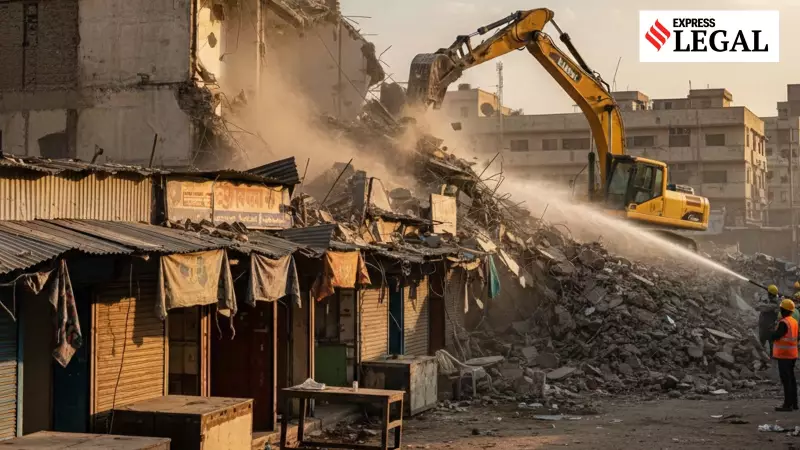
State authorities planned to widen the road stretch from Station Chhak to Fakir Mohan Golei. They also intended to construct essential drainage systems to address waterlogging issues in the area. The demolition and eviction orders aimed to facilitate these infrastructure improvements.
Shopkeepers claimed their businesses had operated for over thirty years. They argued that their livelihoods depended entirely on these shops. In June 2025, the court had directed local authorities to meet with shopkeepers and explore balanced solutions considering all factors.
Why the Plea Failed
The court identified several reasons for rejecting the shopkeepers' petition:
- The structures lacked any legal sanction or valid title
- Shopkeepers held no statutory leases or registered agreements
- Their occupation was admittedly illegal from the beginning
- Paying rent or constructing at personal expense does not create ownership rights over public land
The court also addressed the Street Vendors Act of 2014, which protects licensed vendors. Justice Panigrahi clarified that this legislation cannot grant rights to illegal shop structures like those in question.
Court's Directions
Having dismissed the petition, the High Court issued specific instructions to local authorities. The Balasore Municipality must coordinate with District Administration officials to form a monitoring committee.
This committee will periodically assess the encroachment situation throughout Balasore town. Their responsibility includes taking appropriate measures to prevent unauthorized occupation of government land.
The judgment reinforces that while constitutional rights deserve protection, they cannot legitimize illegal acts. Public infrastructure must remain accessible to all citizens, not appropriated by individuals for private gain.