The Orissa High Court has stepped into a major public controversy, directing the state government to explain its contentious directive that denies petrol and diesel to vehicles lacking a valid Pollution Under Control Certificate (PUCC).
Court Issues Notice, Demands Affidavit
A division bench comprising Chief Justice Harish Tandon and Justice M S Raman took up the matter on Tuesday. The bench formally sought a response from the state government and issued a notice to the Transport Commissioner-cum-Chairman of the State Transport Authority (STA). The court has given the authority 15 days to file an affidavit clarifying its official position on the notification issued on December 20, 2025. The next hearing in this case is scheduled after three weeks.
The PIL Challenge and Conflicting Legal Arguments
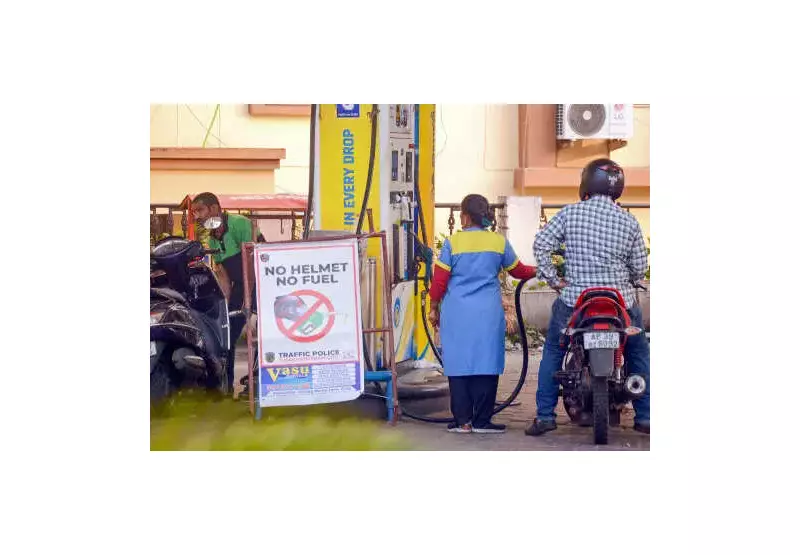
The court's intervention came during the hearing of a Public Interest Litigation (PIL) filed by Bhubaneswar resident Snigdha Patra, represented by advocate Ranjan Kumar Rout. The petition challenges the STA's directive that orders oil marketing companies to enforce a 'no PUCC, no fuel' policy at all petrol pumps across Odisha.
The petitioner's core argument is that the directive is arbitrary and lacks statutory backing. The plea contends that neither the Motor Vehicles Act, 1988, nor the Central Motor Vehicles Rules, 1989, contains any provision that allows for the denial of fuel supply to vehicles without a PUCC. It was further argued that such a restriction is also not provided for under the Essential Commodities Act, 1955.
In its defence, the state government has rooted its decision in Section 190(2) of the Motor Vehicles Act and Rule 115 of the Central Motor Vehicles Rules, which prescribe emission standards. The state maintains that driving a vehicle without a valid PUCC is an offence, and the drastic measure is aimed at curbing vehicular pollution and safeguarding public health.
A Rollout Marred by Delays and Public Pushback
The STA, in its original notification, cited widespread non-compliance with emission norms, observing that a large number of vehicles were plying on roads without valid certificates, thereby worsening environmental pollution. However, the policy's implementation has faced significant practical hurdles and public backlash.
The government initially planned to roll out the rule from January 1, but postponed the deadline to February 1 following public outcry. The situation was exacerbated by heavy rush and long queues at pollution testing centres, leading to further chaos. Consequently, the authorities have once again deferred the enforcement of the rule, this time until March 31, as they grapple with infrastructural and logistical challenges.
The High Court's scrutiny now brings the legal validity of this ambitious yet contentious anti-pollution measure into sharp focus, setting the stage for a crucial judicial examination of administrative power, environmental necessity, and statutory limits.