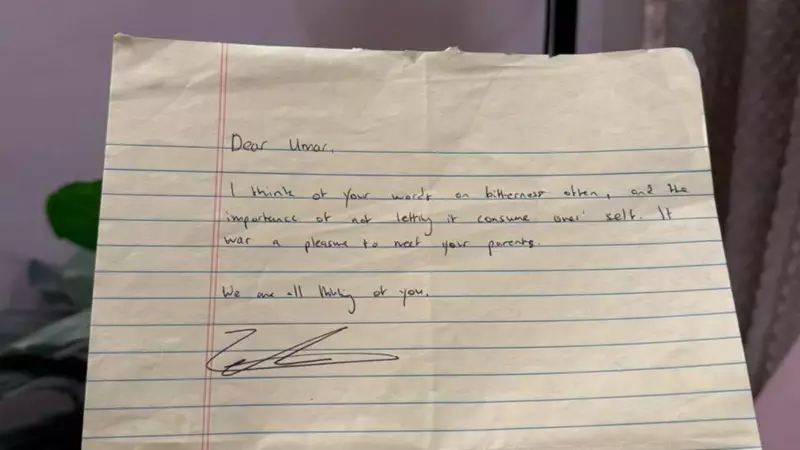
In a significant gesture of international solidarity, New York City Council Member Zohran Kwame Mamdani has sent a handwritten note of support to Umar Khalid, the Indian scholar and activist currently imprisoned in Delhi's Tihar Jail. The note, shared publicly on social media, underscores growing global concern over Khalid's prolonged detention under India's stringent Unlawful Activities (Prevention) Act (UAPA).
A Message of Solidarity from Across the Oceans
The note from the Queens representative was posted on the social media platform X (formerly Twitter) by Khalid's sister, Banojyotsna Lahiri, on Sunday. In his message, Mamdani expressed his admiration for Khalid's unwavering courage and commitment. "Your courage and commitment to justice, in the face of such repression, is an inspiration to all of us," Mamdani wrote. He concluded with words of solidarity, stating, "In solidarity, Zohran Kwame Mamdani."
This act of support is not an isolated one. It reflects a pattern of international attention on Khalid's case, which many human rights organizations have flagged as emblematic of the crackdown on dissent in India. Umar Khalid, a former PhD student at Jawaharlal Nehru University (JNU), has been in jail for over three and a half years. He was arrested in September 2020 for his alleged role in the larger conspiracy behind the Delhi riots that occurred in February of that year.
The Legal Battle and Allegations
The case against Umar Khalid is complex and highly contentious. The Delhi Police, in its chargesheet, has accused him and several others of being part of a "larger conspiracy" to orchestrate the communal violence that engulfed northeast Delhi in February 2020. The violence resulted in the deaths of over 50 people and left hundreds injured.
Khalid's legal team and supporters have consistently maintained that the charges are fabricated and politically motivated, designed to punish him for his vocal criticism of the government and his activism, particularly concerning the Citizenship Amendment Act (CAA). The use of the UAPA in this case has been particularly criticized, as the law makes securing bail exceptionally difficult, effectively allowing for indefinite pre-trial detention.
Despite multiple bail hearings, Khalid's pleas have been rejected at various judicial levels. The legal process continues to unfold slowly, with the next hearing in the case scheduled for July 2024.
Global Echoes and Domestic Implications
Zohran Mamdani's note adds to a chorus of international voices that have expressed concern about the state of civil liberties in India. Mamdani, a democratic socialist and the first Ugandan-American elected to the New York City Council, is known for his progressive stances. His decision to publicly align himself with Khalid's cause brings the issue to a prominent political forum in the United States.
This development is likely to resonate within both international human rights circles and India's domestic political discourse. Supporters of Khalid see it as a vital validation of their long-standing campaign for his release, arguing that his imprisonment is a grave miscarriage of justice. Critics of such international interventions, however, often view them as unwarranted foreign commentary on India's internal legal matters.
The act of sending a personal note, rather than issuing a formal political statement, carries a distinct symbolic weight. It personalizes the struggle and frames it in terms of shared human values of justice and resistance against oppression.
As Umar Khalid remains behind bars, awaiting his day in court, gestures like Mamdani's highlight how his case has transcended national boundaries, becoming a focal point in global discussions about democracy, dissent, and the right to protest.