Noida Court Rejects Bail for Builder in Fatal Accident Case, Legal Battle Escalates to High Court
A chief judicial magistrate (CJM) court in Noida delivered a significant ruling on Monday, denying bail to Abhay Kumar, a director of MZ Wiztown Planners Private Limited. Kumar was arrested in connection with the tragic death of software engineer Yuvraj Mehta, whose car plunged into a water-filled roadside ditch while returning from office.
Court Extends Judicial Remand and Schedules Next Hearing
The court not only refused bail relief but also extended Kumar's judicial remand by an additional ten days. The next hearing in this sensitive case has been scheduled for February 13, allowing investigators more time to gather evidence and build their prosecution.
Legal Team Files Habeas Corpus Petition in Allahabad High Court
Even as the lower court declined relief, Kumar's legal representatives swiftly approached the Allahabad High Court with a habeas corpus writ petition. This urgent legal remedy, which challenges the legality of detention, has been listed for hearing on Tuesday, indicating the seriousness of the constitutional questions raised.
Counsel Swastik Verma, representing Kumar alongside lawyer Shrey Sinha, presented a compelling argument against the arrest procedure. "The arrest by Greater Noida police did not follow basic legal provisions and was violative of Articles 21 and 22 of the Indian Constitution," Verma asserted. These constitutional articles specifically safeguard personal liberty and provide protections against arbitrary arrest and detention.
Allegations of Procedural Violations and Missing Documentation
The defense team raised serious concerns about procedural lapses during Kumar's arrest. They alleged that police failed to issue an arrest memo to either Kumar's family members or his legal counsel, a fundamental requirement under established legal protocols.
"We applied under habeas corpus as the detention is illegal when police did not follow mandatory DK Basu guidelines enforced by the Supreme Court during arrest of any individual," Verma explained. The landmark DK Basu guidelines establish comprehensive procedures that law enforcement must follow during arrests to prevent custodial abuse and ensure transparency.
Verma emphasized the critical nature of this omission: "Without an arrest memo, the grounds on which their client was arrested remain unknown." The lawyers further pointed to alleged discrepancies in the police general diary entry and demanded Kumar's immediate release from what they termed "illegal detention."
Background of the Tragic Incident and Police Investigation
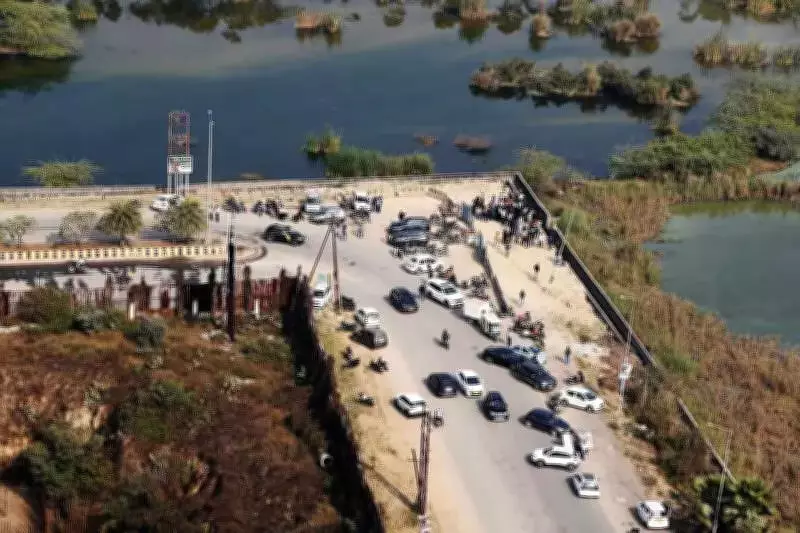
Kumar was arrested on January 20 under charges of culpable homicide not amounting to murder due to negligence, along with other sections of the Bharatiya Nyaya Sanhita (BNS). The case stems from the unfortunate death of Yuvraj Mehta, who drowned after his vehicle fell into an unmarked roadside ditch filled with water.
Police investigations revealed that preliminary findings indicated the pit had been left without proper danger markings or demarcation by the plot owner of an under-construction project. Further inquiry established that Wiztown Planners was handling the project, leading to the FIR naming its directors as responsible parties for the incident.
Contrasting Outcomes for Other Accused Parties
In a contrasting development within the same case, the CJM court granted conditional bail on Friday to two associates of Lotus Greens Constructions Private Limited. Ravi Bansal and Sachin Karnwal secured their release on personal bonds of Rs 25,000 each, with the court imposing specific conditions.
The court mandated that both individuals must not leave the country without obtaining prior permission and must fully cooperate with the ongoing investigation whenever required. This differential treatment highlights the varying degrees of alleged involvement and legal strategies employed by different parties in this complex case.
The legal proceedings continue to unfold as both the lower court and high court examine different aspects of this tragic incident that has raised important questions about construction safety standards, corporate responsibility, and proper arrest procedures under Indian law.