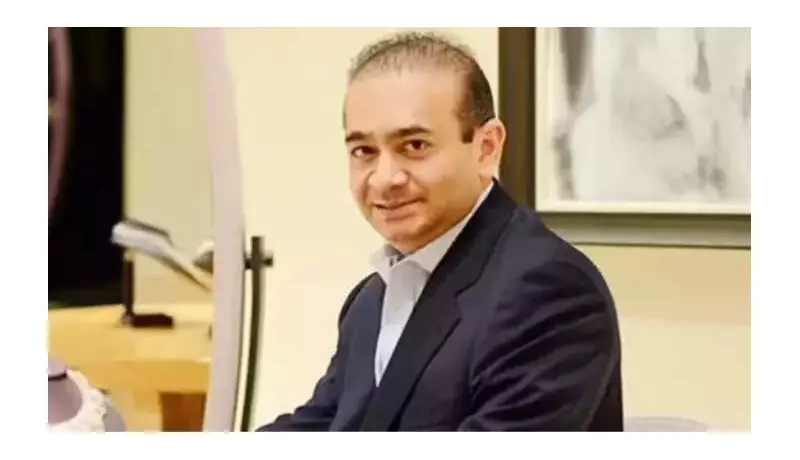
In a significant legal move, fugitive diamond merchant Nirav Modi has applied to the London High Court to reopen his extradition case. His legal team argued on Tuesday that substantial new evidence shows he faces a real risk of interrogation and torture by Indian investigative agencies if sent back to India.
New Evidence and Legal Arguments
Representing the 54-year-old Modi, barrister Edward Fitzgerald KC presented what he termed as a "supervening event." He pointed to the recent judgment in the Sanjay Bhandari case, delivered by the same court on February 28. In that ruling, the court blocked Bhandari's extradition on tax evasion charges, finding he could be tortured or mistreated by Indian police, both inside and outside Delhi's Tihar jail. The judgment controversially stated that the use of torture in India to obtain confessions is "commonplace and endemic."
Fitzgerald argued this sets a new precedent, creating a real risk for Nirav Modi under Article 3 of the European Convention on Human Rights (ECHR), which prohibits torture. He claimed Modi would likely be interrogated by the Central Bureau of Investigation (CBI) and the Enforcement Directorate (ED) upon his return. Supporting this claim, the defense submitted "expert evidence" from former Supreme Court judge Deepak Verma and Indian lawyer Ayush Agarwal, who previously acted for Modi.

A Secret Application and Delayed Extradition
The court was informed that a confidential legal matter, which had barred Modi's removal to India since April 2018, concluded in August of this year and had "failed." While never officially disclosed, this matter is widely believed to have been an asylum claim. This secret application had prevented his extradition, even though it was ordered by the UK government on April 15, 2021.
Modi, who appeared via video link from a London prison wearing a khaki T-shirt, has been in custody since his arrest on an extradition warrant in March 2019. He is charged with defrauding the Punjab National Bank of over $1 billion. Fitzgerald filed to reopen the appeal against extradition just days after the confidential application failed, a move that stopped Modi's imminent removal to India.
India's Assurances and Judicial Skepticism
Representing the Indian government, Helen Malcolm KC provided fresh assurances from New Delhi, stating that Modi would not be interrogated by any agency upon his return. However, she expressed frustration at the prolonged process, noting, "we are now already six years down the line."
The two High Court judges, including Lord Justice Stuart-Smith, showed skepticism towards the last-minute assurances. Stuart-Smith remarked that the "chunky assurances came very late" and that the court was not on a "stable footing" to decide the application without further examination. The judges agreed that the defense experts should scrutinize India's new promises.
The hearing saw the presence of four officials from the CBI and ED who had flown in from India. The next hearing in this protracted legal battle is scheduled for March.