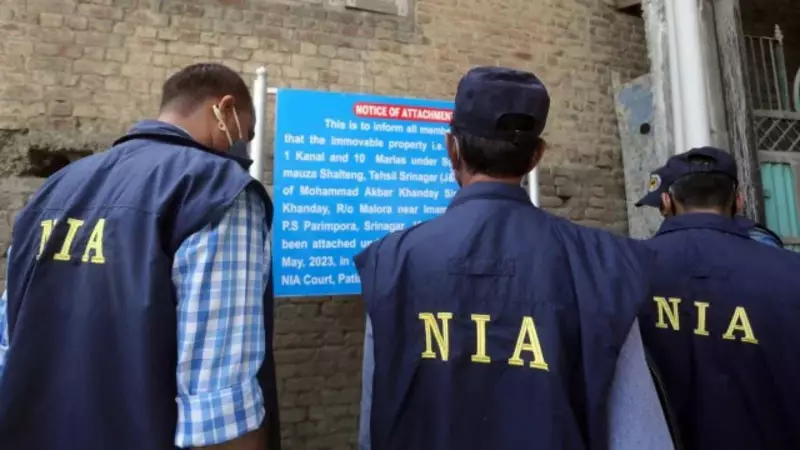
In a significant development, the National Investigation Agency (NIA) has formally taken over the probe into a suspected ricin-based terror plot from the Gujarat Anti-Terrorist Squad (ATS). The handover occurred following a directive from the Union Ministry of Home Affairs earlier this week.
The Case Transfer and Key Evidence
Police officials confirmed on Saturday that the high-profile case is now under the purview of the central anti-terror agency. The Gujarat ATS had made a crucial breakthrough in this investigation on November 8, 2025, with the arrest of three individuals: Dr. Ahmed Mohiyuddin Saiyed (35), Azad Suleman Sheikh (20), and Mohammad Suhail (23). A fourth accused, Abu Khadija, has been declared wanted.
During the initial raids, the ATS seized substantial evidence from Dr. Saiyed, who is alleged to have run a makeshift laboratory from his home in Hyderabad. The recovered items included two Glock pistols, one Beretta pistol, 30 live cartridges, and four litres of castor oil stored in a 10-litre plastic container. Forensic tests later confirmed the presence of traces of Ricin, a deadly plant-based toxin derived from castor beans, in the materials seized from this lab.

Expanding the Network and Terror Reconnaissance
The scope of the alleged plot appears wide. According to investigators, accused Azad Suleman Sheikh and another individual are charged with receiving the seized weapons from Pakistan. Furthermore, they are accused of conducting reconnaissance on several potential targets for a terror attack. These sites reportedly included:
- The RSS office in Lucknow.
- The Azadpur vegetable market (mandi) in Delhi.
- The Naroda fruit market in Ahmedabad, Gujarat.
In a subsequent search on November 21, 2025, at the residence of accused Mohammad Suhail Mohammad Saleem Khan in Lakhimpur Kheri, Uttar Pradesh, the ATS recovered a "black flag" and incriminating literature. This material included documents on 'How to stay anonymous' and a PDF titled 'Security and intelligence course'. ATS sources indicated this literature was sent to Dr. Saiyed by his handler to evade detection by security agencies.
Legal Framework and Next Steps
All arrested accused have been booked under stringent laws, including the Unlawful Activities (Prevention) Act (UAPA), the Bharatiya Nyaya Sanhita, and the Arms Act. While an officer confirmed the forensic finding of Ricin traces, they did not confirm whether the quantity or quality of the isolated toxin was sufficient to execute a bioterror attack. This ambiguity is a key reason cited for the NIA's deeper investigation into the matter.
The transfer of the case to the NIA underscores the national security implications of the plot. The central agency is now tasked with uncovering the full extent of the network, its international linkages, and the precise nature of the planned attack.