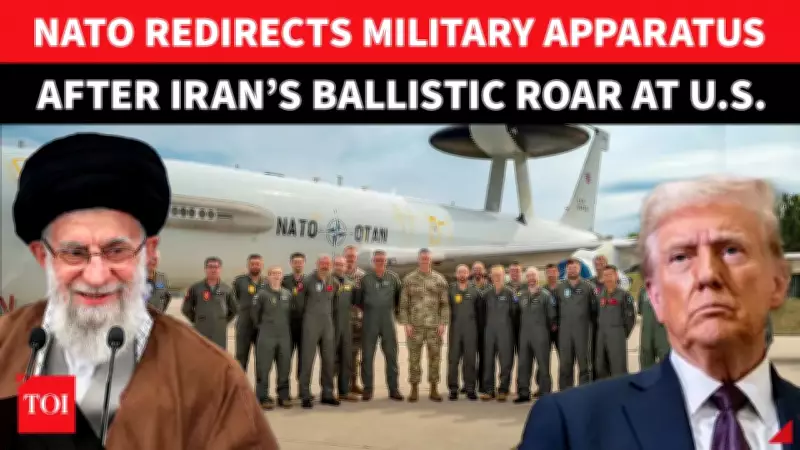
NATO Pivots Surveillance Focus From Russia to Iran in Strategic Shift
In a significant strategic realignment, NATO has redirected its primary surveillance focus from Russia to Iran, marking a pivotal moment in global security dynamics. This move comes in direct response to escalating tensions with Tehran over its nuclear ambitions and recent provocations.
Advanced AWACS Aircraft Deployed From Turkish Base
From the Konya airbase in Turkey, NATO has deployed sophisticated AWACS (Airborne Warning and Control System) radar aircraft to intensively monitor Iranian airspace. These airborne command centers represent the alliance's technological edge, capable of detecting and tracking aerial threats across vast distances with unprecedented precision.
The surveillance operations have been significantly ramped up, with increased flight frequencies and more systematic monitoring patterns. NATO forces are meticulously mapping signals and gathering intelligence to assess Iran's military capabilities and intentions.
Behind Closed Doors: Contingency Planning for Potential Conflict
Within secure diplomatic and military channels, officials are reportedly evaluating extreme scenarios, including the possibility of a U.S.-led military strike designed to compel Tehran into making nuclear concessions. The strategic calculus involves balancing pressure tactics with diplomatic efforts to avoid broader regional conflict.
Turkey, as a critical NATO member bordering Iran, has intensified its military preparations and coordination with alliance partners. The country's strategic location makes it both a frontline state and a crucial operational hub for monitoring developments in the Middle East.
Global Implications of the Surveillance Shift
This surveillance reorientation carries profound implications for international security:
- Reduced focus on Russia: While monitoring of Russian activities continues, resources have been strategically diverted to address what NATO perceives as a more immediate threat from Iran.
- Escalating regional tensions: The intensified surveillance occurs against a backdrop of heightened rhetoric and military posturing between Iran and Western powers.
- Nuclear non-proliferation concerns: At the heart of the tension lies Iran's nuclear program, with Western nations seeking to prevent Tehran from developing nuclear weapons capability.
- Alliance cohesion test: The shift represents a significant test of NATO's ability to adapt to evolving global threats beyond its traditional European theater.
As NATO watches with renewed vigilance and Turkey prepares for potential contingencies, the international community braces for possible escalation. Iran's growing influence and military capabilities cast an increasingly large shadow over regional stability, making this surveillance shift a critical development in global security architecture.