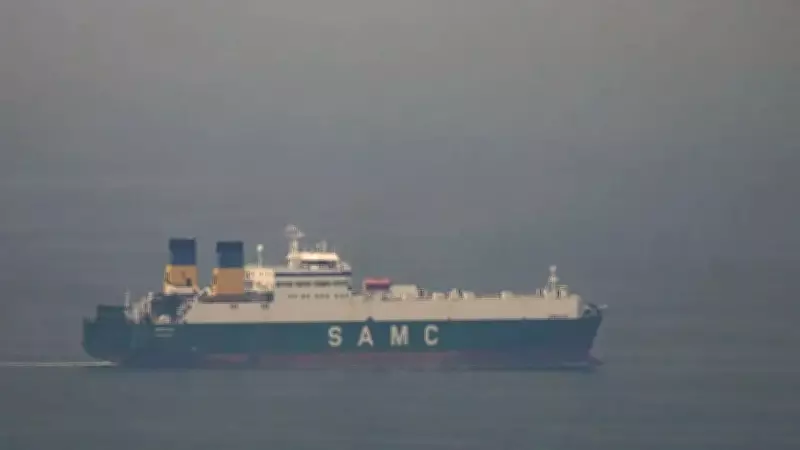
NATO Allies Defy Trump's Call for Hormuz Blockade, Chart Separate Course
In a significant development that exposes deepening fractures within the Western alliance, NATO member states have publicly rejected US President Donald Trump's plan to impose a naval blockade on the strategically vital Strait of Hormuz. Instead, key European powers are proposing an alternative multinational mission that would only deploy after a durable ceasefire is established in the six-week conflict with Iran.
Trump's Blockade Announcement Meets Immediate Resistance
The diplomatic rift emerged after President Trump declared on Sunday via Truth Social that "The Blockade will begin shortly. Other Countries will be involved with this Blockade." This followed failed weekend negotiations to end hostilities that began on February 28. The US military later clarified that the blockade, scheduled to commence at 1400 GMT on Monday, would specifically target vessels traveling to or from Iranian ports.
Since the conflict's outbreak, Iran has effectively controlled the strait, permitting passage primarily for its own shipping while seeking to institutionalize this dominance and potentially impose transit fees. The strait serves as a critical chokepoint for global oil shipments, carrying approximately one-fifth of the world's petroleum.

European Powers Announce Alternative Security Initiative
Britain and France led the rejection of Trump's approach, with British Prime Minister Keir Starmer telling the BBC unequivocally: "We're not supporting the blockade." He emphasized his government's determination to avoid escalation, stating, "My decision has been very clearly that whatever the pressure, and there's been some considerable pressure, we're not getting dragged into the war."
French President Emmanuel Macron announced on Monday that France would organize a conference with Britain and other nations to create a strictly defensive multinational mission aimed at restoring safe navigation through the strait. "This strictly defensive mission, distinct from the belligerents, will be deployed as soon as the situation allows," Macron stated.
Details of the Proposed Multinational Mission
According to diplomatic sources, planning for this alternative mission could begin as early as Thursday in either Paris or London. The initiative reportedly involves approximately 30 countries, including:
- Gulf nations
- India
- Several European Union members (Greece, Spain, Italy, Netherlands, Sweden)
The mission's objectives would include:
- Establishing clear rules for safe maritime passage
- Coordinating military vessels to escort commercial tankers
- Providing security reassurance without engaging in hostilities
Diplomatic sources indicate that both Iran and the United States would be informed about the mission but would play no direct operational role. Several European countries have expressed willingness to participate, but only after hostilities conclusively end and agreements ensure their ships won't be attacked.
NATO's Delicate Position and Diplomatic Complications
The situation presents NATO Secretary General Mark Rutte with a complex challenge. Last week, diplomats revealed that Rutte informed European governments that President Trump expects concrete commitments to help secure the strait. On April 9, Rutte acknowledged that NATO could potentially operate in the region if all 32 member states agreed on a mission mandate.
Turkish Foreign Minister Hakan Fidan added another layer of complexity, arguing that reopening the Strait of Hormuz should be achieved through diplomacy rather than military force. He cautioned that creating an international oversight force would be "complicated" and called for NATO to reset its relationship with Trump during a scheduled summit in Ankara this July.
This coordinated European rejection of Trump's blockade plan represents one of the most visible policy divergences within the alliance since the Iran conflict began, setting the stage for potentially tense negotiations about the future of Middle Eastern maritime security.