

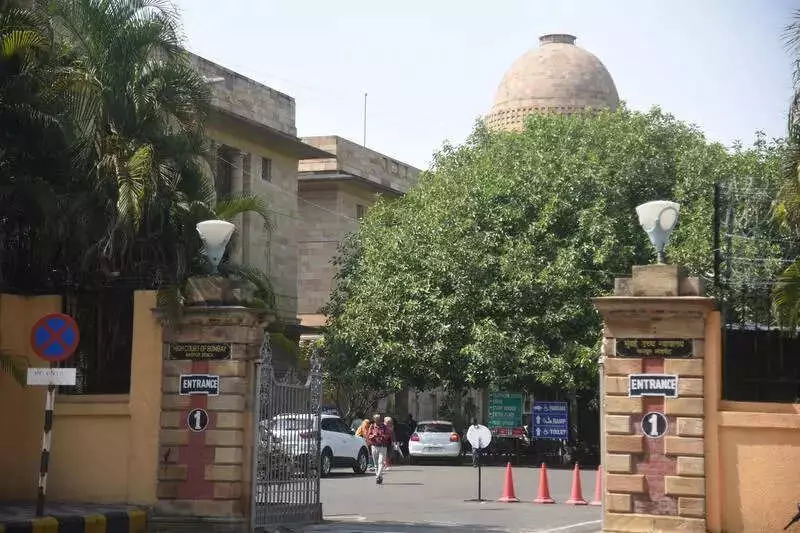
Security at the Nagpur bench of the Bombay High Court has been dramatically increased, with authorities imposing a complete ban on all vehicle parking in the immediate vicinity of the court complex starting Monday. This decisive action comes in response to fresh threat assessments that now rank Nagpur among the most vulnerable cities in Maharashtra from a terrorism perspective.
Why the Sudden Security Overhaul?
The police order, now prominently displayed within the court premises, cites multiple critical reasons for the stringent new measures. The historic court building's symbolic importance, its inherently sensitive status, and recent intelligence inputs have collectively prompted this security review. Nagpur's recent official classification as a "highly sensitive" city necessitated a re-evaluation of protection for key institutions like the High Court.
Past security incidents, including specific threats targeting judges and the court building itself, have underscored the urgent need for more robust precautions. To physically prevent parking near the boundary, landscaping work has already been completed around the complex.

Addressing Chaos and Vulnerability
For a long time, the area outside the court was plagued by haphazard and unauthorized parking by lawyers, litigants, and visitors. This caused severe traffic congestion and, more alarmingly, obstructed crucial access routes for emergency services. Police officials state that the new ban is designed to eliminate these security vulnerabilities that could be exploited.
"Any vehicle found parked in the prohibited zone will face strict legal action," the police order warns, emphasizing a zero-tolerance approach to ensure the safety of the judiciary, court staff, and the public.
Mixed Reactions from the Legal Community
The security upgrade has received a varied response from Nagpur's legal fraternity. The Bar Association has formally welcomed the move to enhance protection. However, its president, Abhay Sambre, highlighted a practical concern. While supporting tighter security, he stressed that it should not cause undue inconvenience to advocates and suggested that the administration identify and designate alternative parking areas nearby.
Privately, several lawyers expressed a sense of relief that the persistent and chaotic parking issue, a long-standing nuisance, is finally being addressed systematically, even if it means adjusting their routines.
The police have appealed for full cooperation from all stakeholders, clarifying that the sole intent behind the sweeping measure is to safeguard the judiciary, all court users, and the general public. The move marks a significant shift in how security is managed at one of Nagpur's most important judicial landmarks.






