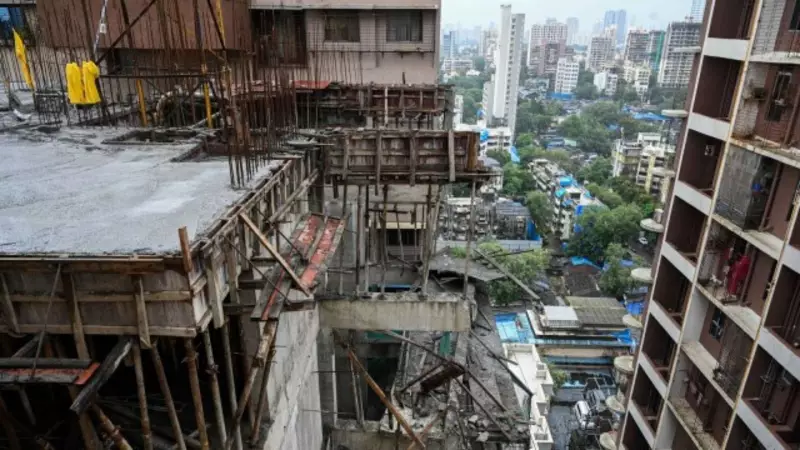
In a ruling that underscores the critical importance of pedestrian safety in India's bustling urban centers, a Mumbai sessions court has delivered a powerful message to negligent builders. The court refused anticipatory bail to a builder whose loose cement block allegedly caused the death of a 38-year-old banker in a tragic incident that has shaken the city.
The Tragic Incident That Shook Mumbai
The case revolves around a heartbreaking incident where Siddharth Shirsat, a banker with ICICI Bank, was walking along a footpath in Ghatkopar West when disaster struck. A cement block, reportedly dislodged from an under-construction building, fell directly on him, causing fatal injuries. The young professional was rushed to a nearby hospital but succumbed to his injuries, leaving behind a grieving family and colleagues.
Court's Stern Message to Builders
Additional Sessions Judge Dr. S. B. Bhajipale rejected the builder's anticipatory bail application with strong observations about construction safety protocols. The court emphasized that builders and contractors have a fundamental responsibility to ensure public safety, particularly for pedestrians navigating near construction sites.

"The life of a pedestrian is important," the court stated unequivocally, highlighting how the incident represented a clear failure in implementing basic safety measures at construction sites.
Legal Proceedings and Police Action
The Mumbai Police had registered a case against the builder under Section 304-A (causing death by negligence) of the Indian Penal Code. The prosecution argued that the builder failed to implement necessary safety precautions, despite being aware of the risks posed by the ongoing construction work near public pathways.
During the hearing, the court noted that the investigation was at a crucial stage and granting bail could potentially hamper the process of evidence collection and witness examination.
Broader Implications for Urban Safety
This case brings into sharp focus the growing concerns about pedestrian safety in Indian cities, where rapid urbanization often outpaces safety regulations. The judgment serves as:
- A warning to construction companies to prioritize safety measures
- A precedent for similar cases involving public safety negligence
- A reminder to municipal authorities to enforce stricter monitoring of construction sites
- Recognition of pedestrians' rights to safe passage in urban areas
Industry Reactions and Public Response
The ruling has sparked discussions within the real estate and construction industry about improving safety standards. Urban planning experts have welcomed the judgment, noting that it could lead to more stringent implementation of safety protocols at construction sites across metropolitan areas.
Meanwhile, the victim's family has found some solace in the court's decision, seeing it as an important step toward accountability and justice. The case continues to serve as a sobering reminder of the human cost when safety measures are compromised in the race toward urban development.