MP High Court Directs State and Centre to Respond to Jain Temple Claim in Bhojshala Complex
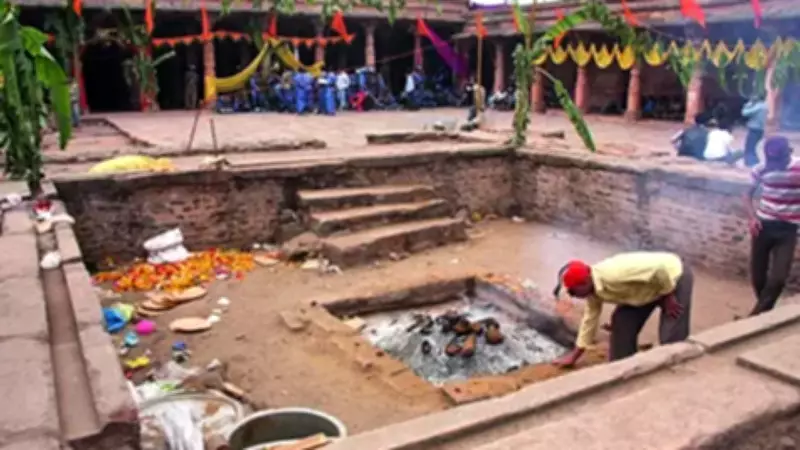
The Indore bench of the Madhya Pradesh High Court issued a significant directive on Friday, ordering the state government, the Central government, and other respondents in the long-standing Bhojshala-Kamal Maula Masjid complex case to file their replies. This order comes in response to a Public Interest Litigation (PIL) that asserts the existence of a medieval Jain temple and gurukul within the disputed monument located in Dhar district.
Judicial Bench and Petitioner Details
The bench, comprising Justice Vijay Kumar Shukla and Justice Rajesh Kumar Gupta, delivered this direction while hearing the PIL filed by Salekh Chand Jain, a Delhi-based social worker. The petitioner is seeking the right to worship for the Jain community at the monument, which has historically been a contentious site between Hindu and Muslim communities.
In its order, the bench noted, "Certain objections are raised by learned counsel for respondents regarding the maintainability of the present petition as a PIL. Considering the same, they are granted time to file their short reply/objection before the next date of hearing." This indicates that the respondents have raised preliminary concerns about the PIL's validity, prompting the court to allow them time to formally address these issues.

Claims and Constitutional Arguments in the PIL
The current PIL presents a detailed argument, claiming that the Bhojshala complex once housed a Jain temple and gurukul. Based on this assertion, the petitioner argues that followers of Jainism are entitled to worship rights at the complex under Articles 25, 26, and 29 of the Indian Constitution. These articles specifically deal with religious freedom and cultural rights, providing a legal foundation for the community's claim.
Furthermore, the PIL makes a notable claim regarding an idol associated with the complex. It states that the idol, currently housed in the British Museum in London, is that of Goddess Ambika, a Jain Yakshini. This contrasts with Hindu claims that the idol represents Vagdevi (Goddess Saraswati), and that the monument was originally known as 'Saraswati Sadan'.
Historical and Religious Context of the Dispute
The Bhojshala-Kamal Maula Masjid complex has been a focal point of religious and historical debate for decades. Muslim communities have long asserted that the structure is the Kamal Maula Mosque, a claim they say was verified by the Archaeological Survey of India (ASI) as far back as 1903. This adds a layer of historical documentation to the dispute, highlighting the complex's multifaceted heritage.
The PIL's introduction of Jain claims introduces a new dimension to this already intricate case. By alleging the presence of a medieval Jain temple and gurukul, it potentially expands the scope of the dispute beyond the Hindu-Muslim binary that has dominated discussions. This could influence future hearings and the overall resolution of the case.
Implications and Next Steps
The High Court's directive to file replies underscores the judicial system's role in addressing complex religious and historical claims. As the state, Centre, and other respondents prepare their responses, the case is poised to delve deeper into:
- The archaeological and historical evidence supporting each community's claims.
- The interpretation of constitutional rights in the context of shared religious sites.
- The potential for multi-faith worship arrangements at disputed monuments.
This development marks a critical juncture in the Bhojshala case, with the court's upcoming hearings likely to scrutinize the PIL's maintainability and the substantive merits of the Jain community's assertions. The outcome could set precedents for similar disputes across India, emphasizing the balance between religious freedom and historical preservation.