A quiet district in Gujarat has become the epicenter of a massive scandal involving the fraudulent registration of marriages. What began as a small irregularity in a single village has exploded into a sprawling racket, putting multiple administrative areas under the scanner and raising serious questions about governance and oversight.
From Bhadrala Village to a District-Wide Scandal
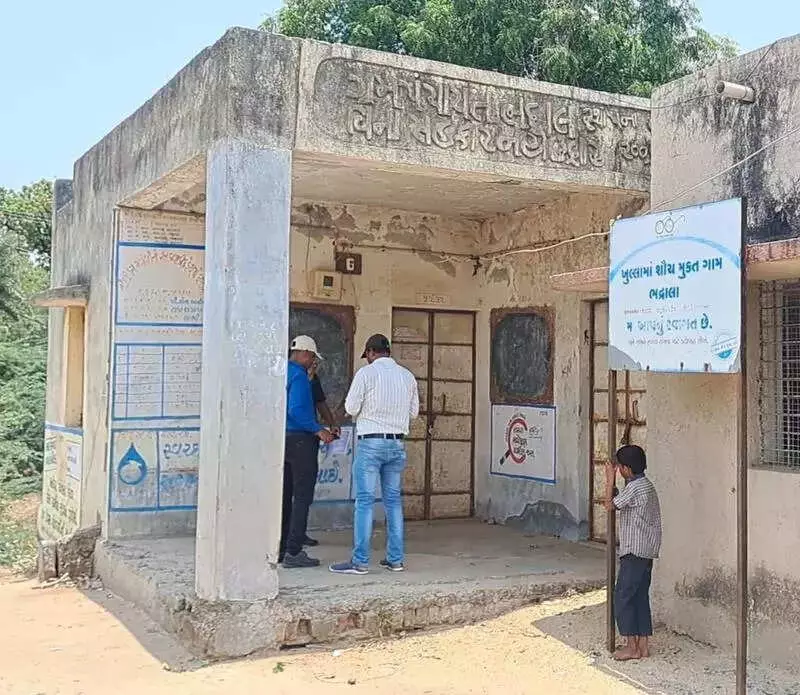
The first cracks appeared in May 2024 in Bhadrala village, located in the Shehra taluka of Panchmahal district. Authorities grew suspicious when marriage certificates were issued to couples hailing from outside Gujarat and even from other districts within the state. Initially thought to be an isolated case involving the local village official, or talati, the investigation quickly revealed a much larger and organized operation.
The alarm was raised after parents, whose children had eloped, began filing Right to Information (RTI) applications. They sought details about marriages their children had solemnized, evidenced only by these certificates. When the Bhadrala talati failed to provide satisfactory replies, Shehra Taluka Development Officer (TDO) Parth Patel took matters into his own hands. His examination of the records uncovered shocking irregularities.

Patel's scrutiny revealed that nearly 550 marriage certificates had been issued in Bhadrala based on incomplete or questionable documents. The geographic spread of the couples was baffling: registrations included pairs from Uttar Pradesh, Nagaland, Rajasthan, Madhya Pradesh, and distant Gujarat districts like Kutch and Surat. All these certificates were issued by the same talati, P M Parmar, who was promptly suspended from duty.
The Racket Expands: A Viral Boast and Fresh Probes
As investigators dug deeper, they began examining certificates issued by Parmar in other villages where he had previously worked. In total, close to 2,000 marriage certificates from Bhadrala, Malav village in Kalol taluka, and Palli village in Ghoghamba taluka were flagged for detailed scrutiny.
Just as the first case was being processed, a new shockwave hit the district earlier this month. A video went viral featuring Arjun Meghwal, the talati of Kanjipani village in Jambughoda taluka. In the clip, Meghwal brazenly boasted that he had earned Rs 50 lakh by issuing approximately 2,000 marriage certificates and claimed no one could touch him. He even dared the person recording him to continue filming.
Following the viral video, authorities launched a fresh investigation into marriage certificates issued in five villages where Meghwal had served. Deputy District Development Officer (DDO) Dhaval Sangada, leading the probe, stated that documents for 1,116 certificates have been collected so far. "Discrepancies have already been found in some cases. Given the volume of records, it will take time to ascertain the exact number of fraudulent certificates," Sangada explained.
Glaring Irregularities and a Disturbing Pattern
Preliminary findings paint an alarming picture. Sources indicate that many certificates lack basic mandatory elements. In some cases, photographs of the bride or groom are missing, while in others, the required fees were never paid.
A First Information Report (FIR) filed by the father of a girl who married against his wishes revealed glaring inconsistencies. The affidavits for the marriage were allegedly purchased in Unjha in north Gujarat, nearly 250 km away, at 2:30 pm, and were submitted in Kanjipani by 4 pm the same day—a logistical improbability. Shockingly, two affidavits cited different wedding locations: one in Harij and the other in Kanjipani itself.
Investigators believe most of these dubious certificates involve couples marrying against their families' wishes. "Such couples prefer to register their marriages far from their native places to avoid detection. Whether this happened due to gross oversight or active connivance is what we are probing," a source revealed, adding that the surge in RTI queries from parents supports this theory.

Parth Patel, the officer who exposed the Bhadrala case, noted that the documents clearly showed people from far-flung regions choosing obscure villages for registration. "Why they chose these villages is something I cannot say. We acted purely on what the records revealed," he stated.
Legal Loopholes and Procedural Failures
Officials clarify that marrying outside one's native place is not illegal. "The law allows marriage registration at the place where the wedding takes place, regardless of where the bride or groom belongs," DDO Sangada said. However, the core issue in Panchmahal is the reckless issuance of certificates without proper verification. "Had procedures been followed and documents been complete, these marriages would have been legally valid," he added.
Legal experts point out that these registrations heavily relied on affidavits—typically three or more—from the couple, priest, and witnesses. Prominent Vadodara-based advocate Hitesh Gupta explained that this is a common practice to avoid the longer procedure under the Special Marriage Act. "The documentation is aimed at showing that a marriage ceremony has already been conducted at the place where the registration is being done," he said.
The scandal has exposed a significant failure in administrative checks and balances, turning once-quiet Panchmahal villages into hubs for a paper marriage racket that has potentially legalized thousands of unions without due diligence.