Mangaluru's top police official has issued a clarion call for a united front against the city's growing drug problem, stating that a solution is impossible without the active involvement of students, families, and community leaders.
A Collective Responsibility: Students, Parents, and Leaders
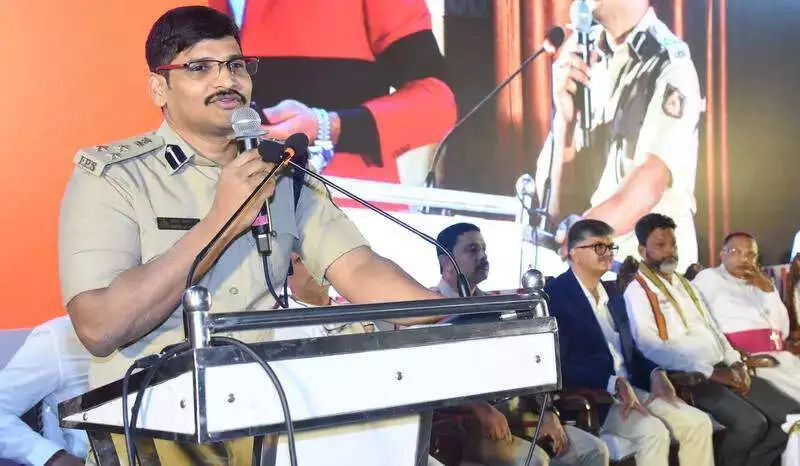
Addressing a 'Drug-Free Mangaluru' campaign organized by the Make a Change Foundation and the Mangaluru City Police, Commissioner Sudheer Kumar Reddy CH emphasized that the battle cannot be fought by law enforcement alone. He directly appealed to students, urging them to move beyond being passive observers. "Do not remain silent spectators," he said, encouraging them to report drug peddlers and incidents of substance abuse within their peer groups.
The commissioner outlined critical roles for other stakeholders. He stressed that parents must vigilantly monitor their children for warning signs like sudden behavioural shifts, a drop in academic performance, and unexplained spending. He advised against giving excessive pocket money, which could potentially fuel addiction. Furthermore, he called upon religious leaders and jamaats to proactively work towards the rehabilitation and support of those struggling with addiction.

Police Action and Stark Statistics
Highlighting the effectiveness of community tip-offs, Commissioner Reddy revealed that the city police arrested 25 drug peddlers in just the last week, based primarily on information received through the anonymous complaint system. He presented alarming data to underscore the severity of the crisis.
Professional college students, Pre-University students, and engineering students are among the most affected demographics in Mangaluru. The commissioner shared that distressed parents often approach him after discovering their children's addiction. On the enforcement side, he noted that at least 120 undertrials currently in Mangaluru prison are involved in drug-peddling cases, with nearly 80% of all inmates having direct or indirect links to drug abuse.
"Drugs impair a person's thinking ability. Those booked under the NDPS Act face a minimum imprisonment of 10 years," he cautioned, warning of the severe legal and personal consequences.
Voices from the Community: Rehabilitation and Awareness
The campaign saw influential community figures share their perspectives. Ramakrishna Math seer Yogeshananda warned that drugs only offer a fleeting escape while causing lasting damage to health. He advocated for engaging in positive pursuits like music, dance, and sports to maintain a balanced mind and life.
SKSSF general secretary Anees Kausar Ali pushed for a structural solution, emphasizing the need to establish de-addiction centres in every district of Karnataka to tackle the problem effectively.
Mangalore Diocese bishop Rev Fr Peter Paul Saldanha expanded the definition of addiction, stating that modern society is addicted not just to substances but also to power, religion, and pleasure. He suggested that spiritual fulfillment could be a key to overcoming these voids. "When divine reality enters our lives, addictions gradually fade," he remarked.
Outlining the campaign's scope, Make a Change Foundation chairman Suhail Kandak stated that the initiative includes 102 different programmes aimed at spreading awareness about the dangers of drug abuse.