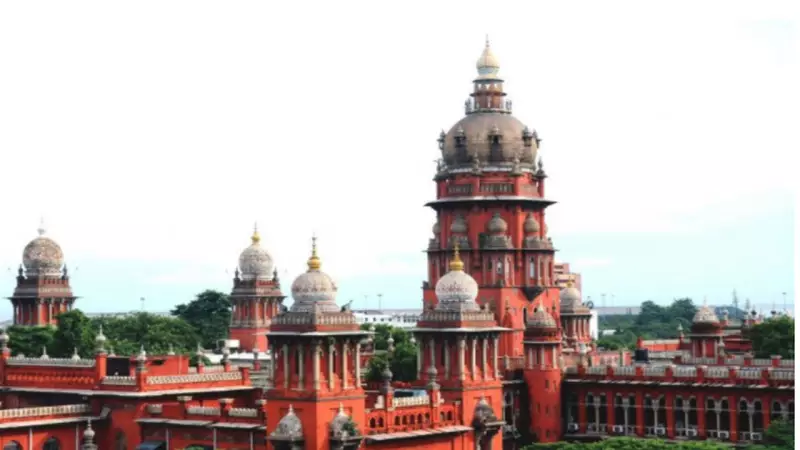
In a landmark verdict, the Madras High Court has decisively settled a protracted religious dispute, reaffirming the exclusive rights of the Thengalai sub-sect of Sri Vaishnava to lead key recitations and rituals at the historic Sri Devarajaswamy Temple in Kancheepuram.
Court's Verdict Ends Long-Standing Sectarian Dispute
A division bench comprising Justice R Suresh Kumar and Justice S Sounthar delivered this pivotal judgment on Tuesday. The bench disposed of a batch of writ petitions, writ appeals, and a contempt case filed by members of both the Thengalai and Vadagalai sects. The core of the conflict revolved around the right to recite the Sri Sailesa Dayapatram and the concluding Vazhi Thirunamam, as well as the leadership in rendering the Nalayira Divya Prabandham during temple worship.
Historical Precedents and Legal Validity Upheld
The court meticulously examined the legal history of the case. It observed that a series of earlier landmark judgments—from the years 1882, 1915, 1939, and 1969—had already conclusively determined that the Adhyapaka Mirasi rights belong exclusively to the Thengalai sect residing in Kanchipuram. The bench ruled that these historical findings continue to remain legally valid and enforceable.

In its reasoning, the court clarified the role of the Vadagalai sect. It stated that their participation must be limited to joining the recitations as worshippers, without the right to independent invocation. The bench rejected arguments suggesting that pre-constitutional rulings violated fundamental rights. It held that constitutional religious rights cannot be used to alter long-established temple customs or rituals, particularly in situations where there is no restriction on an individual's fundamental right to worship.
Interim Order Set Aside and Final Directions Issued
As a consequence of its final ruling, the division bench set aside an interim order previously passed by a single judge. That interim order had permitted both sects to offer parallel recitations. The court dismissed the petitions filed by the Vadagalai group seeking performance rights. Conversely, it allowed petitions that sought enforcement of the traditional practice and police protection for the same.
The judges directed the temple authorities to ensure the smooth conduct of rituals strictly in accordance with the established practice, thereby restoring the exclusive rights of the Thengalai sect. This verdict brings legal closure to a dispute that has spanned generations, reinforcing the primacy of documented tradition and historical precedent in the governance of temple rituals.