
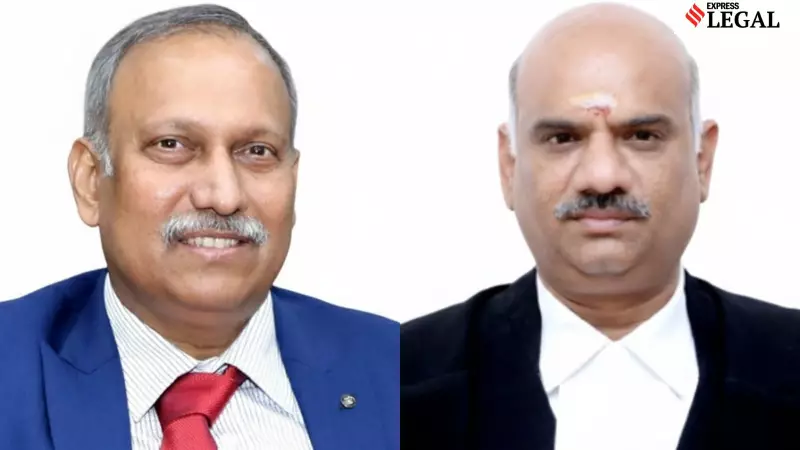
In a significant ruling that underscores the primacy of personal liberty, the Madras High Court has granted interim bail to a YouTube journalist while delivering sharp criticism of what it termed "draconian" preventive detention laws. The court declared the detention of the journalist illegal, emphasizing that constitutional freedoms form the bedrock of democracy.
Court's Stern Observations on Liberty and State Power
A bench comprising Justices S M Subramaniam and P Dhanabal was hearing a habeas corpus petition filed by the wife of the journalist. The petition challenged his detention under the Tamil Nadu Prevention of Dangerous Activities Act, 1982 (Act 14 of 1982), where he was labeled a "sexual offender." The detention order had been passed on December 13, 2025.
In its order dated December 30, 2025, the bench made powerful observations. "Personal liberty is not a concession given by the State. It is a duty mandated on the State under the Constitution," the court stated. It further warned that failure to protect this liberty results in unconstitutionality, empowering aggrieved citizens to sue the state for damages.
Background of the Case and Alleged Procedural Lapses
The case involves a 51-year-old investigative journalist who runs a YouTube channel. The state's action stemmed from several criminal cases registered against him in 2024. Five of these cases were earlier transferred to the CBCID for investigation by a single judge of the High Court on February 13, 2025.
Later, on December 3, 2025, the Chennai Police invoked the preventive detention law, categorizing him as a "sexual offender" based on these past cases and a fresh "ground case." The petitioner's counsel, Advocate Arun Anbumani, argued that this ground case originated from a routine landlord-tenant dispute from November 30, which should have been addressed through civil remedies, not draconian detention.
Critical procedural lapses were highlighted. The journalist submitted a representation against his detention on December 12, 2025. However, his wife alleged that prison authorities delayed forwarding it to the government until December 15, and it was rejected on technical grounds of delay, denying him a prompt hearing.
A Warning Against Silencing Dissent
The court's order serves as a strong rebuke to the use of state power to curb free speech. The bench noted that branding journalists or social media commentators as offenders to clamp detention orders directly infringes upon the freedom of speech under Article 19(1)(a) of the Constitution.
"The beauty of our democracy lies in the Constitutionally guaranteed freedom and when the State Machinery themselves starts stifling with litigations, the people lose faith in democracy," the court poignantly observed. It added that if the state machinery hunts down every opinion, it will neither silence voices nor yield any viable result.
The bench granted 12 weeks of interim bail to the journalist, stressing that preventive detention is an exceptional power that must be exercised with extreme caution and never as a routine formality. The court concluded that an illegal detention cannot be allowed to continue as personal liberty is a vital fundamental right.