

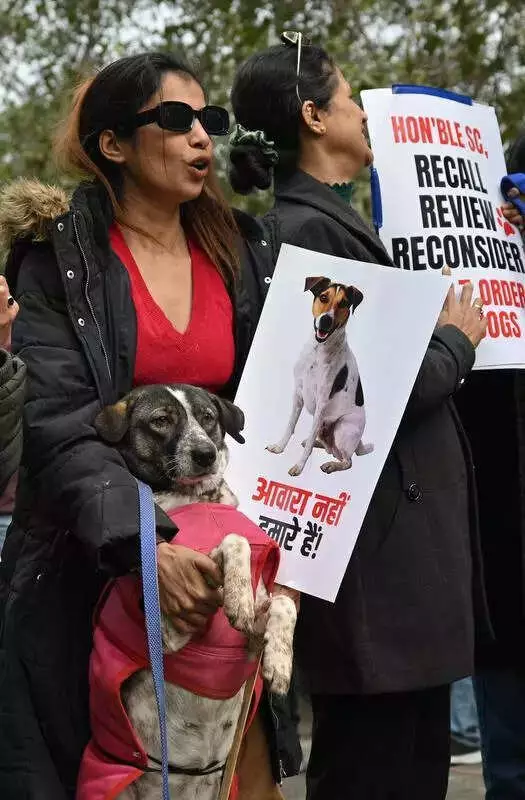
In a significant display of dissent, animal welfare advocates and concerned citizens in Lucknow joined hands literally, forming a human chain at Eco Garden on Sunday. The protest was directed against the Supreme Court's interim order concerning community dogs, with the next hearing scheduled for January 7.
Protesters Decry "Impractical" Supreme Court Directive
The gathering, which included members of various animal welfare organisations, students, and local residents, voiced a strong demand for the withdrawal of the court's interim order. They argued that the directive, which mandates the removal of dogs from public spaces, blatantly violates existing animal welfare laws. Protesters held placards aloft, calling for the protection of dogs and branding the Supreme Court's order as both "impractical and unscientific".
The focal point of their anger is the interim order issued on November 7, 2025. This order requires the removal of community dogs from areas such as schools, hospitals, and transport hubs. Activists present at the Lucknow protest claimed that this ruling has already led to increased instances of cruelty and illegal relocations of animals in several cities across the country.

Call for Scientific, Humane Population Control
Leading the voices of reason, animal activist Rakhi Kishore emphasised that the solution lies not in removal but in scientific management. "We want the Supreme Court to strengthen the Animal Birth Control (ABC) Rules, 2001, and promote the ‘catch, neuter, vaccinate and release' method," she stated. This approach, widely endorsed by animal experts, is considered the most effective and humane way to manage street dog populations while ensuring public health safety through vaccination.
Experts Warn Against Shelter-Based Solutions
The protest also saw participation from veterinarians and legal experts, who added weight to the activists' claims. They pointed out a critical flaw in the assumption behind the court's order: the feasibility of building shelters. The experts argued that constructing and maintaining shelters for the vast numbers of community dogs is not a practical solution. Furthermore, they warned that crowding animals in shelters could potentially increase the risk of disease outbreaks, creating a new set of problems for both animal and human communities.
As the January 7 hearing approaches, the protest in Lucknow sends a clear message to the judiciary. The demonstrators urge a reconsideration of the interim order, advocating for a policy rooted in the proven, humane principles of the Animal Birth Control program rather than forced removal.






