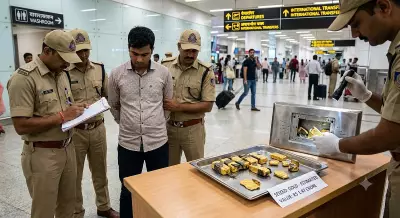
Lucknow Police Dismantle Interstate Gang Operating Through E-Rickshaw Distraction Crimes
In a significant breakthrough against urban crime, Lucknow police have successfully busted an interstate criminal gang that had ingeniously transformed the city's ubiquitous e-rickshaws into mobile crime zones. The operation, marked by patience, precision, and quiet courage rather than brute force, culminated in multiple arrests and the recovery of stolen valuables.
Undercover Operation Uncovers Sophisticated Crime Pattern
The pivotal moment came through a meticulously planned undercover operation spearheaded by 27-year-old sub-inspector Siddhi Mishra. Her 14-day covert surveillance mission exposed the gang's unusual yet highly effective modus operandi that had baffled authorities for months. The gang had been systematically executing thefts in crowded urban areas, leaving victims confused and unaware of the crime until it was too late.
Their method was deceptively simple yet remarkably sophisticated: One woman would pretend to vomit to create initial distraction, another would stealthily prick the target with a safety pin to induce discomfort, while a third would initiate a conversation, convincing the victim that some mysterious illness was affecting everyone in the vicinity. In these crucial seconds of confusion, the criminals would swiftly steal jewellery and cash before disappearing into the crowd.

Human Intelligence Proves Decisive in Investigation
With complaints mounting across Lucknow, police launched an extensive investigation that involved scanning footage from over 700 CCTV cameras throughout the city. However, it was traditional human intelligence gathering that ultimately proved decisive in cracking the case.
Sub-inspector Siddhi Mishra, disguised in a burqa and plain clothes, blended seamlessly into crowded neighbourhoods and public transport routes. She spent days travelling in e-rickshaws between Awadh Crossing and Charbagh, carefully observing suspicious patterns, tracking movements, and embedding herself within the suspects' environment without detection.
"I rehearsed how to move and behave inconspicuously so as not to raise suspicion. The idea was to get as close as possible without being detected," Mishra explained about her undercover methodology.
Breakthrough Leads to Arrests and Recovery
Mishra's persistence paid off when she spotted a woman behaving suspiciously on Tuesday. Trusting her instincts, she followed the suspect, which eventually led her to a slum hideout in Dubagga. Acting swiftly on her intelligence, police teams raided the location and arrested four members of the criminal network.
Those arrested include alleged kingpin Sheshkala, her husband Dayalal, and two associates—Pooja and Gauri alias Najma, who is currently pregnant. Police recovered substantial stolen property from their possession, including gold chains, rings, and silver anklets taken from numerous victims.
Interstate Operation with Family Connections
According to ACP Krishnanagar Rajneesh Kumar, the accused are natives of Nagpur who had been operating across multiple cities. "They have been involved in over a dozen such incidents in Lucknow alone," he confirmed during the investigation.
During interrogation, gang leader Sheshkala revealed that all gang members belong to the same family and deliberately lived in slum settlements to avoid detection. By day, they posed as street vendors, scouting crowded marketplaces and transport hubs for soft targets—particularly elderly individuals or those wearing visible jewellery.
Once a target boarded an e-rickshaw, the gang would execute their well-rehearsed distraction routine, stealing valuables within moments before vanishing into the urban landscape. To evade law enforcement, they frequently changed locations, altered their appearances, and even used different identity documents.

Significance of the Police Operation
The successful bust not only dismantles a highly mobile and adaptive crime network but also highlights the critical importance of undercover policing and instinct-driven investigation in tackling modern urban crime. The operation demonstrates how traditional police work, combined with contemporary surveillance techniques, can effectively combat sophisticated criminal enterprises that exploit urban infrastructure for illicit activities.
This case serves as a reminder of the evolving nature of urban crime and the innovative approaches required to address security challenges in crowded metropolitan environments where public transportation becomes both a necessity for citizens and a potential tool for criminal exploitation.