London High Court Judge Rejects Nirav Modi's Attempt to Delay $8 Million Bank of India Trial
A London high court judge has firmly denied fugitive diamond merchant Nirav Modi's application to adjourn his ongoing trial against the Bank of India. The bank is pursuing Modi for a substantial sum of $8 million, which is approximately Rs 72.5 crore, alleging that he provided a personal guarantee for a loan extended to his company, Firestar Diamond FZE, based in Dubai.
Judge Criticizes Delay Tactics and Refuses Last-Minute Defense Amendments
Deputy High Court Judge Simon Tinkler not only rejected the adjournment plea but also turned down Modi's attempt to amend his defense at the eleventh hour. Judge Tinkler emphasized that further applications without a material change in circumstances could constitute an abuse of the court process. He described these moves as part of a repeated pattern of delay, non-compliance, and general muddying of the case by Modi.
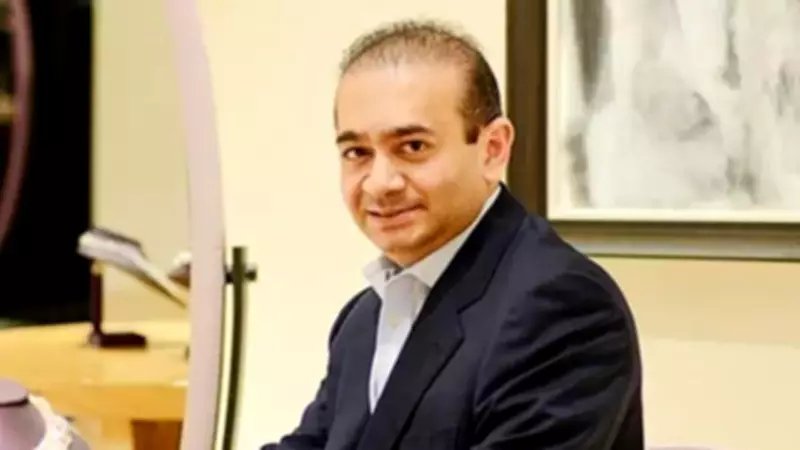
Nirav Modi, aged 54, who is wanted in India for large-scale fraud, appeared from Pentonville Prison via video link. Observers noted he looked the worse for wear during the proceedings. Modi continues to deny any liability to the bank, and the trial is scheduled to commence at the London Circuit Commercial Court on March 23.
Defense Cites Health Issues and Extradition Concerns as Reasons for Delay
Modi's barrister, James Kinman, argued for the adjournment by highlighting his client's challenging circumstances. Kinman stated that Modi suffers from severe visual impairment, reducing his reading ability to 60% of what it was, and is diagnosed with clinical depression. Additionally, Modi faces distractions such as noise outside his cell and lacks access to a computer. Until January 17, he had to share his cell with a cellmate who slept until noon, further limiting his preparation time.
Kinman also pointed to pressing demands on Modi's time due to the reopening of his extradition case, with a hearing listed for mid-March. He asserted that Modi views the extradition as a matter of life and death, fearing real risks of torture or death if returned to India, and noted that the court's consideration of these proceedings lends credibility to these concerns.
Bank of India Responds and Modi's Last-Minute Defense Claims
Representing the Bank of India, Tom Beasley responded to the adjournment request by stating that if granted, it should be no more than a few months. Beasley warned that a longer delay, such as a year, could coincide with Modi's potential extradition, complicating the trial further.
In a last-minute move, Modi applied to add extra points to his defense just before Friday's hearing. These included claims that he did not sign the personal guarantee and that his signature may have been forged, along with a generalized assertion that the government of India has instigated this case. However, Judge Tinkler refused these amendments, reinforcing his stance against what he sees as obstructive tactics.
The court's decisions underscore the legal challenges facing Nirav Modi as he navigates both the civil trial in London and his impending extradition proceedings, with all parties now preparing for the scheduled trial date in March.