Kolkata Bomb Hoax Investigation: Interstate Probe Considered as Pattern Emerges
Kolkata Police's Special Task Force (STF) and the West Bengal Police are actively considering launching an interstate investigation as they confront the third consecutive day of coordinated fake bomb scares across the city. This alarming pattern has become unmistakably clear, with authorities noting that each day a different set of institutions is systematically targeted.
A Systematic Pattern of Threats
The threats themselves follow a disturbing formula, combining veiled warnings with specific, time-sensitive demands. Perpetrators typically set a precise deadline by which institutions must be "vacated" to allow for purported anti-sabotage checks, creating widespread disruption and fear.
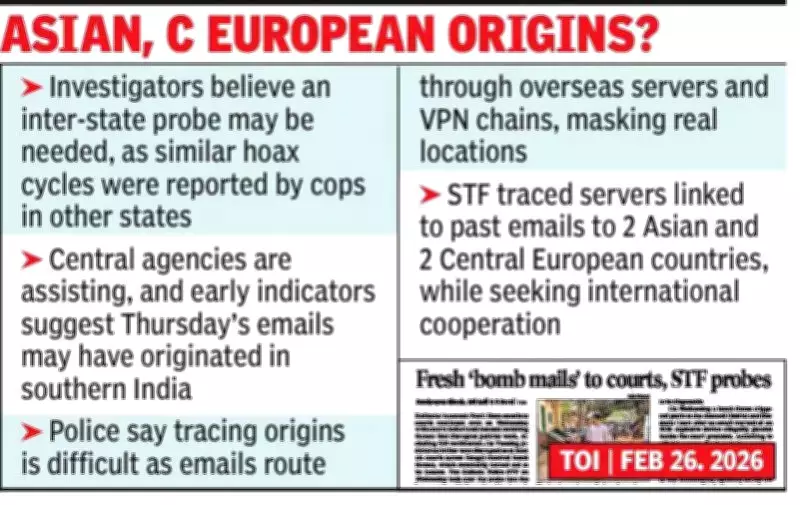
Sources within the Kolkata Police STF have revealed that this cycle of hoax calls has been observed by law enforcement agencies in multiple other Indian states. However, a consistent challenge has been the successful identification and apprehension of the perpetrators, whether the incidents occurred in northern states like Delhi and Punjab or southern regions such as Tamil Nadu.
Central Agencies and Tech Giants Enlisted for Support
"We are actively seeking assistance from central investigative agencies," stated a senior police officer involved in the probe. "Simultaneously, we are pursuing rapid technical support from major technology companies to help trace the digital origins of these threats."
Early forensic indications suggest that the threatening emails received on Thursday may have originated from somewhere in southern India, though this remains preliminary information subject to verification.
Previous Investigation Breakthroughs and Ongoing Challenges
The city's cyber crime unit and STF teams, which investigated approximately six similar hoax bomb threats targeting educational institutions and museums in Kolkata last year, reported a significant development during that earlier probe. A leading technology firm committed to updating its privacy statement and service agreement, thereby enabling the company to share crucial user data that could support police investigations.
Police sources explained the sophisticated technical hurdles they face: when attempting to trace the origin of a threat, investigators frequently find themselves led not to a physical desktop computer in locations like Delhi, but instead to servers located in offshore jurisdictions such as Panama or the Seychelles, or in central European countries.
The VPN Challenge and International Cooperation
Perpetrators are employing sophisticated Virtual Private Network (VPN) chains, routing their connections through multiple encrypted tunnels to conceal their true digital footprints. This technique ensures that the IP address visible to Kolkata Police investigators is merely a dummy address, masking the actual source.
Since the Kolkata Police STF assumed control of the investigation, forensic experts have successfully traced the servers used to send several of these threatening emails to two Asian nations and two Central European countries. However, even these server locations can be further masked through additional layers of encryption and obfuscation techniques.
A senior police officer emphasized the collaborative nature of the ongoing investigation: "The Kolkata Police STF unit, in close coordination with state police forces, is working alongside central agencies and actively seeking international cooperation to definitively identify and apprehend those responsible for these disruptive and dangerous hoaxes."