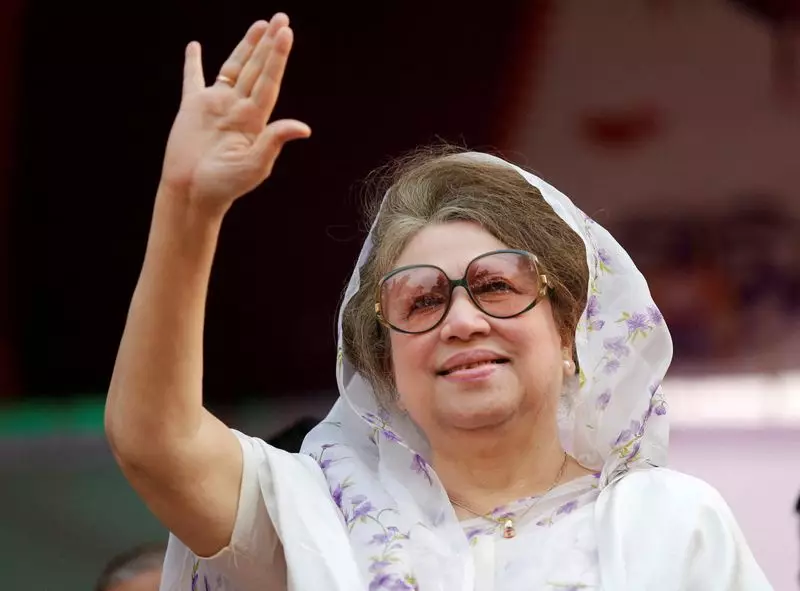
The political landscape of Bangladesh has been irrevocably altered with the passing of Begum Khaleda Zia, the country's first woman Prime Minister and a towering figure who dominated its politics for decades. The former leader of the Bangladesh Nationalist Party (BNP) passed away at the age of 79, drawing the curtain on a life marked by immense personal tragedy, fierce political battles, and a profound impact on the nation's democratic journey.
From Tragedy to the Throne: The Making of a Leader
Khaleda Zia's entry into the rough-and-tumble world of Bangladeshi politics was not one she chose, but one that was thrust upon her by fate. Born on August 15, 1945, in the Dinajpur district, her life took a dramatic turn following the assassination of her husband, President Ziaur Rahman, in 1981. The military ruler's death left a power vacuum and a party, the BNP, in search of leadership. Despite her initial reluctance, Khaleda Zia was persuaded to step into the political arena, transforming from a shy, private person into the formidable 'Begum' who would challenge the political establishment.
Her rise was meteoric. She took over the chairmanship of the BNP and, through a combination of her husband's legacy and her own growing political acumen, led the party to a stunning victory in the 1991 general elections. This win was historic, making her not only the first woman Prime Minister of Bangladesh but also the first to be elected in a democratic poll since the country's independence. Her administration focused on economic liberalization and infrastructure development, but it was also a period defined by the beginning of an intense and often bitter rivalry.

The Epic Rivalry: Khaleda Zia vs. Sheikh Hasina
The defining narrative of modern Bangladeshi politics is the decades-long power struggle between two women: Khaleda Zia of the BNP and Sheikh Hasina of the Awami League. This rivalry, often dubbed a battle of the 'Begums,' shaped the nation's destiny. Their conflict was deeply personal, ideological, and political. Zia represented the political lineage of her husband, who founded the BNP, while Hasina was the daughter of Bangladesh's founding father, Sheikh Mujibur Rahman.
Their tenures alternated in a cycle of victory and vendetta. After her first term from 1991 to 1996, Zia returned to power in 2001, serving until 2006. This period saw significant economic growth but was also marred by severe political polarization, allegations of corruption, and widespread violence. The rivalry paralyzed parliament, fueled street protests, and led to a deeply divided nation. The period following 2006 was particularly turbulent, with a military-backed caretaker government taking over, and both Zia and Hasina being imprisoned on corruption charges, though Zia's sentence was later suspended.
Legal Battles and Declining Health
Khaleda Zia's later years were overshadowed by legal troubles and failing health. In 2018, she was convicted in two corruption cases related to the Zia Orphanage and Zia Charitable Trust, which disqualified her from contesting elections. Initially imprisoned, she was released in 2020 on an executive order by the government, but her freedom was conditional and she remained largely confined to her home. Her health deteriorated significantly, with complications from liver cirrhosis, diabetes, and arthritis. In her final months, she was treated at a hospital in Dhaka, where she passed away, leaving behind a party grappling with leadership questions and a nation reflecting on her complex legacy.
A Contested Legacy and an Uncertain Future
Khaleda Zia's legacy is a study in contrasts. To her millions of supporters, she was a symbol of resilience, a devoted leader who upheld her husband's political vision and provided a crucial counterbalance to the Awami League. They credit her governments with fostering private sector growth and infrastructure projects. To her critics, her tenures were periods of heightened corruption, political violence, and the nurturing of Islamist forces for political gain.

Her death marks the end of an era in Bangladeshi politics. It removes the central figure around which the BNP was built and unified, potentially creating a major vacuum within the country's principal opposition. The party now faces the monumental task of reinventing itself beyond the shadow of the Zia family. For Prime Minister Sheikh Hasina, the passing of her lifelong rival closes a definitive chapter, even as the political dynamics she helped create continue to influence Bangladesh's democracy.
The story of Khaleda Zia is inextricably linked to the story of Bangladesh itself—a tale of tragedy, power, resilience, and the enduring, often tumultuous, struggle for democratic identity. Her life reminds us that in Bangladesh, politics is not just about policy, but deeply personal sagas that shape the fate of millions.