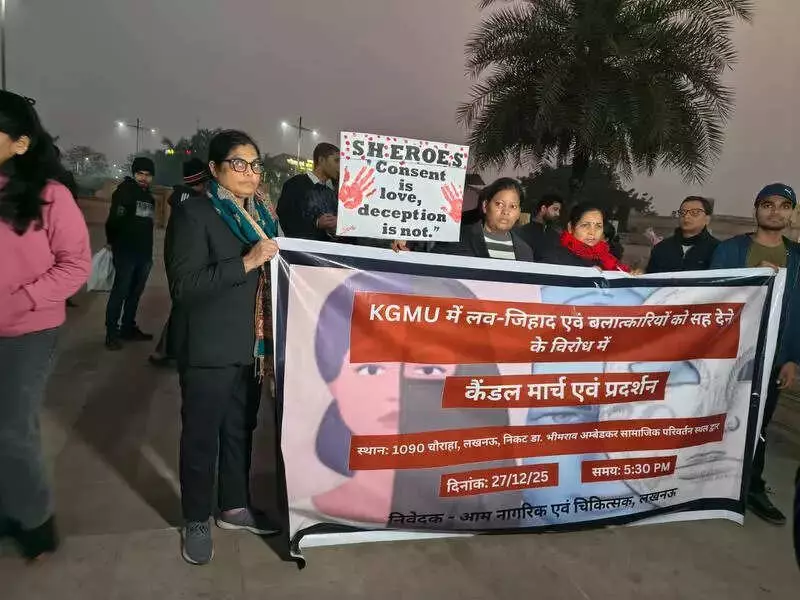
A powerful demonstration of solidarity unfolded at King George's Medical University (KGMU) in Lucknow on Saturday, as approximately 100 individuals from diverse backgrounds gathered to demand justice for a woman junior doctor. The protest, a solemn candle march, was organized in response to serious allegations of sexual harassment and an attempt to force the doctor into religious conversion.
Who Joined the Protest and What Are the Allegations?
The gathering at the 1090 crossing was not just a student protest but a collective outcry from civil society. The participants included doctors, medical students, lawyers, social workers, and acid attack survivors. Their primary grievance was the alleged inaction by the KGMU administration despite the matter being formally reported earlier. The protesters raised slogans directly targeting the accused doctor and the university's governing body, accusing them of failing to provide a safe environment.
Dr. Abhishek Pandey, one of the voices at the march, articulated the group's frustration. He stated that no effective action had been taken by the authorities so far and emphasized that their sole demand was justice for the complainant. The protest underscored a deep-seated concern over the safety and dignity of women within the prestigious medical institution.

Key Demands of the Protesters
Moving beyond mere accusations, the protesters presented concrete demands to address systemic failures. Their central call was for the complete scrapping of the existing internal complaints committee at KGMU. They argued that the current panel had lost credibility due to its perceived inaction.
In its place, they demanded the formation of a new, independent, and transparent panel. This proposed committee would have a broader and more authoritative composition, including:
- Police officials to ensure legal oversight.
- Doctors from within and outside the university.
- Legal experts and lawyers.
- Representatives from women's rights organizations.
This demand highlights a significant trust deficit in the institution's internal mechanisms for handling such sensitive complaints.
Voices from the March: Accusations of Pressure and Lapses
Dr. Tavishi Mishra, another participant, shed light on the alleged administrative failures that fueled the protest. She pointed out serious administrative lapses in how the case was handled from the beginning. More alarmingly, she claimed that students who wished to speak up were under pressure to remain silent, creating a culture of fear.
For Dr. Mishra and many others, this protest transcended the specifics of a single case. She emphasized that the march was about fundamental justice and humanity. The presence of acid attack survivors and social workers amplified this message, framing the issue as a broader fight for women's safety and institutional accountability in Uttar Pradesh's capital.
The Saturday night candle march at KGMU has cast a spotlight on the urgent need for robust and impartial grievance redressal systems in educational institutions. It signals a growing unwillingness among professionals and students to tolerate alleged misconduct and administrative apathy.