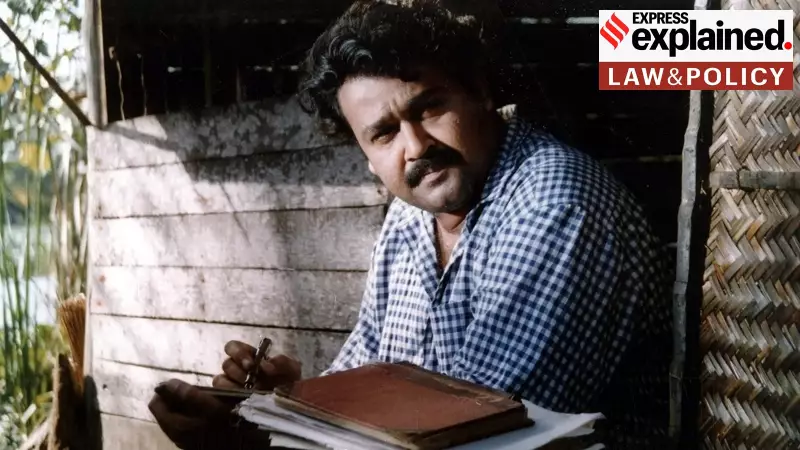
In a dramatic legal development that has captured national attention, the Kerala High Court has launched a rigorous examination of the central government's controversial decision to grant superstar Mohanlal a certificate for possessing ivory tusks. The case has become a focal point for debates surrounding wildlife protection and celebrity privileges under Indian law.
The Heart of the Legal Battle
Justice Sophy Thomas, presiding over the case, has raised fundamental questions about the government's authority to issue such certificates under the Wildlife Protection Act. The court's scrutiny centers on whether the government overstepped its bounds by granting permission for possession of ivory items that were allegedly acquired before the 1991 ban came into effect.
The court specifically questioned: "How can the central government issue a certificate allowing possession of items whose ownership cannot be legally established?" This probing inquiry strikes at the very foundation of the government's decision and could have far-reaching implications for similar cases across the country.
Historical Context and Legal Framework
The controversy dates back to 2022 when the Ministry of Environment, Forest and Climate Change issued the certificate to Mohanlal, permitting him to keep the ivory tusks for his "personal use." This decision was made under Section 43 of the Wildlife Protection Act, 1972, which allows for certain exemptions.
However, the legal waters became murky when the court noted that the certificate was granted based on the assumption that the tusks were inherited property. The fundamental issue, as highlighted by the bench, is that inheritance can only be claimed from a legal owner – and if the original acquisition violated wildlife protection laws, the inheritance chain itself becomes legally questionable.
Broader Implications for Wildlife Protection
This case transcends celebrity gossip and touches upon critical issues of wildlife conservation and legal consistency. The court's observations suggest a growing judicial concern about maintaining the integrity of wildlife protection laws, even when dealing with high-profile individuals.
The legal proceedings have brought to light several important questions:
- How should pre-ban ivory possessions be treated under current law?
- What constitutes sufficient proof of legal acquisition?
- Should celebrities receive different treatment under wildlife protection laws?
- How can India balance cultural heritage with modern conservation needs?
What Comes Next?
The Kerala High Court has given the central government time to present its detailed response, setting the stage for a potentially landmark judgment. The outcome could establish important precedents for how India handles similar cases involving heritage items made from protected materials.
As the legal battle continues, wildlife conservationists, legal experts, and the film industry alike are watching closely. The final judgment could redefine the boundaries of personal property rights versus wildlife conservation priorities in modern India.