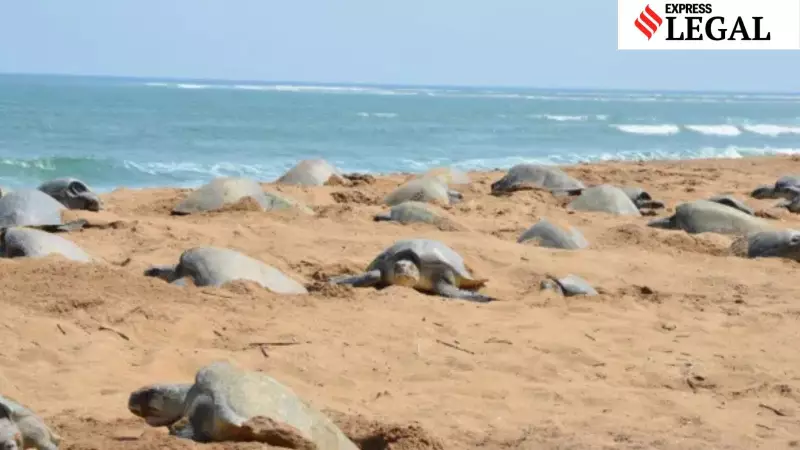
In a significant ruling that prioritizes ecological balance, the Kerala High Court has declared that flood-control measures cannot proceed at the expense of endangering sensitive coastal ecosystems and protected wildlife. The court's directive came in response to legal challenges against large-scale sand and vegetation removal at the Thottappally Spillway in Alappuzha district, a recognized nesting ground for endangered Olive Ridley and Hawksbill turtles.
The Legal Battle: Flood Control vs. Turtle Habitat
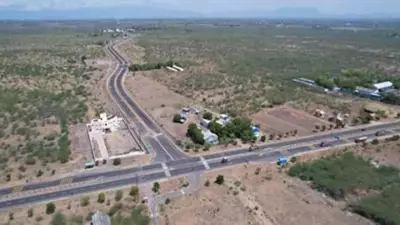
The case stemmed from an order issued by the Alappuzha District Collector, acting under the Disaster Management Act of 2005. The order permitted the clearance of sand, soil, and casuarina trees from the Thottappally Spillway. The state government's justification was that this activity was essential for ensuring the free flow of floodwater from the Pampa, Manimala, and Achenkovil rivers into the Arabian Sea, thereby mitigating recurring floods in the low-lying Kuttanad region.
However, environmental groups and local residents filed writ petitions contesting the move. They argued that the spillway area is an integral part of a fragile coastal ecosystem and a crucial habitat for sea turtles. The petitioners alleged that the sand removal had evolved from a purported emergency measure into an annual activity causing severe ecological damage, effectively becoming systematic sand mining.

Court's Observations on a "Clear and Present Danger"
A bench comprising Chief Justice Nitin Jamdar and Justice Syam Kumar V M examined the case closely. The court noted reports from the Forest Department and the Kerala Coastal Zone Management Authority (KCZMA), which confirmed that years of sand removal had drastically altered the natural beach landscape.
The reports highlighted the formation of troughs and depressions, increased coastal erosion, and significant damage to areas vital for turtle nesting. The forest authorities had explicitly warned that the damage posed a "clear and present danger" to the protected turtle species.
The bench observed that decisions on the quantity of sand to be removed were taken solely from an engineering and flood-control perspective, with no prior ecological impact assessment. Crucially, no ecology expert was involved in the decision-making or monitoring process.
Directive for a Sustainable Balance
Emphasizing that environmental concerns cannot be sidelined in the name of disaster management, the court ordered the Chief Secretary of Kerala to constitute a multi-departmental committee within two months. This committee will be headed by the Alappuzha District Collector and will include senior officials from:
- Irrigation and Water Resources Department
- Forest and Wildlife Department
- Kerala Coastal Zone Management Authority (KCZMA)
- Local Panchayats
- A representative from a local NGO with environmental expertise
The court mandated that any future sand or soil removal from the Thottappally Spillway must only proceed after obtaining recommendations from this committee and conducting a thorough assessment of the ecological and environmental impact.
With these directions, the court disposed of the petitions, firmly establishing that flood-control operations must not transform into routine mining activities that destroy fragile coastal ecosystems and threaten endangered wildlife like the Olive Ridley turtles.